Acetosa, Sorrel
Oxalis
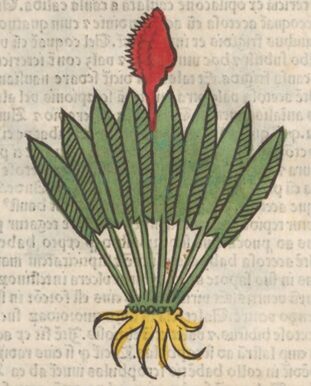
Acetosa
Herbarius latinus, Petri, 1485
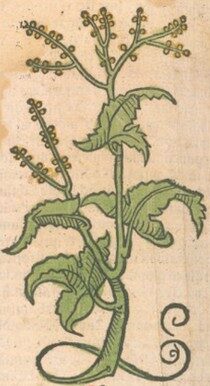
Acetosa
Ortus Sanitatis, Meydenbach, 1491
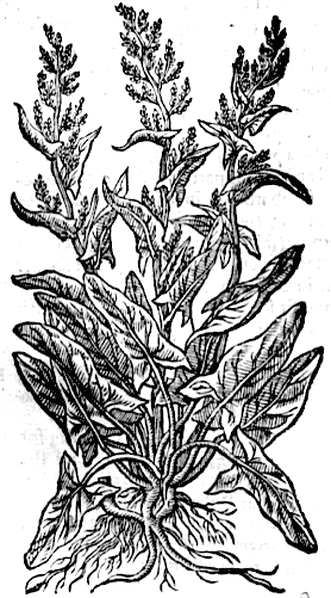
Acetosa
Gerards Herbal, 1636
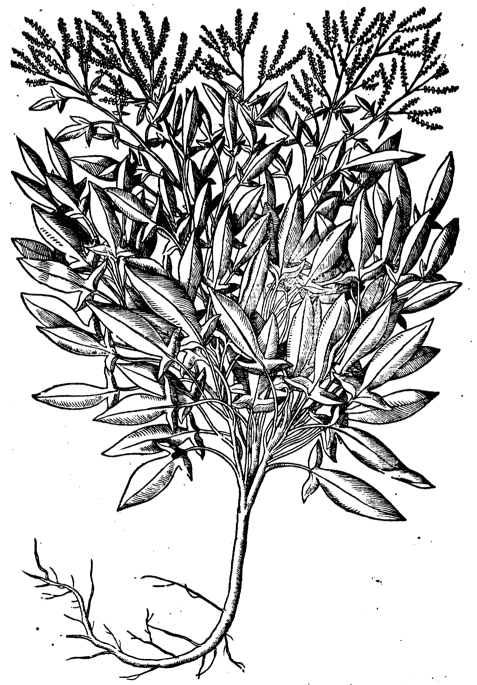
Acetosa minor
New Kreuterbuch, Matthiolus, 1563
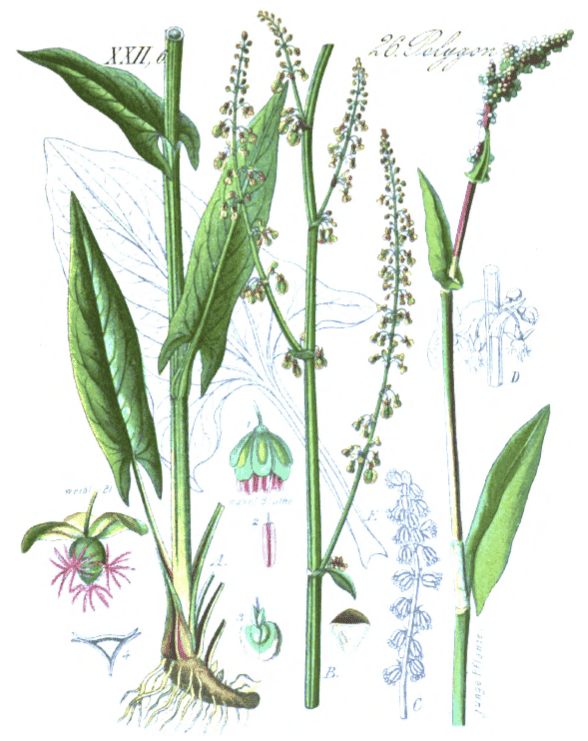
Flora von Deutschland (9), Kohler, 1882

Members CLICK HERE for the PRO VERSION
Botanical name:
Rumex acetosa (syn. Acetosa vulgaris)
Greater and Lesser types were known; Lesser type appears to be ‘Sheep Sorrel’
Parts used:
Herb, Seed; also the Roots
Temperature & Taste:
Cool, dry. Sour
Classification:
2A APERIENT MEDICINES. 2B ATTENUATERS
3B. FEBRIFUGE & ANTIPYRETIC 3D. CORDIALS & CARDIACS
4c. CARDIAC. 4e. STOMACHIC. 4g. HEPATIC. 4h. NEPHRITIC. 4j. NERVINES
Uses:
1. Clears Heat from the Stomach and Liver:
2. Clears Heat, Cools the Blood, Stops Bleeding:
3. Clears Heat, Refreshes the Spirit:
4. Clears Heat and Damp, Promotes Urine:
Dose:
Substitute:
Corrective:
Main Combinations:
Major Formulas:
Decoction to Cool the Blood (Wirtzung)
Cordial Decoction (French Pharmacopoeia)
Troches of Ramich (Mesue)
Troches of Spodium (Trochisci Spodii) (Avicenna
Cautions:
1. Large doses may irritate the Stomach.
2. Large doses may produce urinary irritation with polyuria.
4. It may cause a mild dermatitis when used externally.
5. ‘Hurtful to Melancholy persons’. (Pemell, Tractus de Facultatibus simplicium, 1653)
Main Preparations used:
Conserves of the leaves; Distilled Water; clarified and thickened Juice; Syrup of the leaf juice