Alangium, Ankola
Ankola, Tamraphala (Ayurveda)
Azinjil (Siddha)
Alang (Unani)
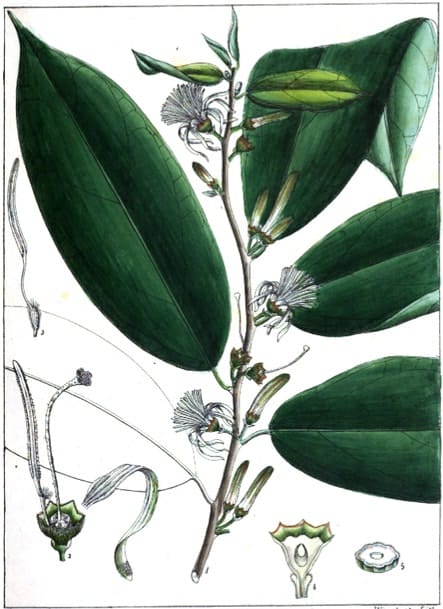
Illustrations Of Indian Botany, Vol. II, Wight, 1850
Botanical name:
Alangium lamarcki (syn. A. salviifolium)
Parts used:
Root-bark
Also the Leaf, Flower, Fruit, Seed
Temperature & Taste:
Cool, dry. Bitter
Uses:
ROOT-BARK:
1. Clears Heat, Stops Leakage:
-Diarrhea, Dysentery (with Buttermilk or Rice)
2. Settles Wind, Stops Spasms:
-Spasms
-Hypertension
-Urticaria
3. Emetic
-used as a substitute for Ipecac
4. Kills Worms
-used for Worms
LEAF:
1. Diabetes
-regarded as useful for Diabetes
2. Externally:
-applied to Rheumatism
FRUIT:
1. Clears Heat and Poison:
-chronic poisoning (with Ghee: Charaka)
-Epilepsy
2 Strengthening.
-Emaciation, Consumption
3. Stops Bleeding
4. Strangury
-given for Strangury
FLOWER:
1. Clears Heat:
-Migraine, Internal Abscess
2. Clears Damp, Promotes Urine:
-urinary diseases including Stones
-reduces Obesity
SEEDS:
1. Clears Heat, Stops Cough:
-Bronchial Asthma
2. Clears Heat from the Blood:
-Heat-type Bleeding and Skin-diseases
Dose:
Used internally with Buttermilk, Rice water or Barberry.
Root-bark in Powder: 1–2 grams
Bark Paste: 5 grams as a dose
Substitute:
The root-bark has been used as a substitute for Cephaelis ipecacuanha (Ipecac)
Main Combinations:
1. Diarrhea, Dysentery:
i. bark paste (5 grams) twice daily
ii. Root-bark has been used with Barberry. (Ayurveda)
Cautions:
Avoid overdose