Ammi, Bishop’s Weed, Ajowan
Ameos, Ethiopian Cumin, Alexandrian Cumin, Cuminum Regium
Nankhuah, Ajwain (Unani)
Aatrilal (Ammi majus, Unani)
Ajowan, Ajwain, Yavani (Ayurveda)
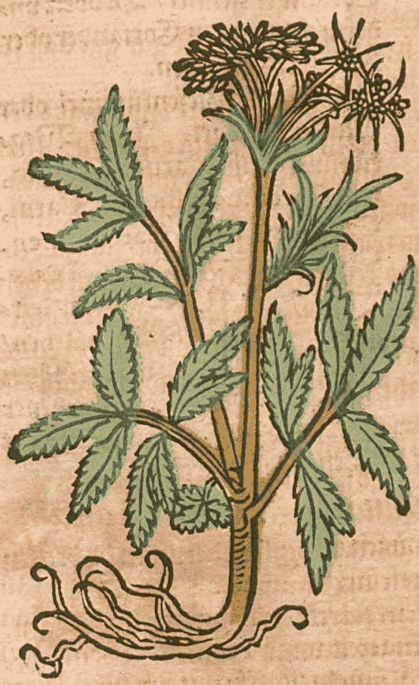
Krauterbuch, Lonitzer, 1578
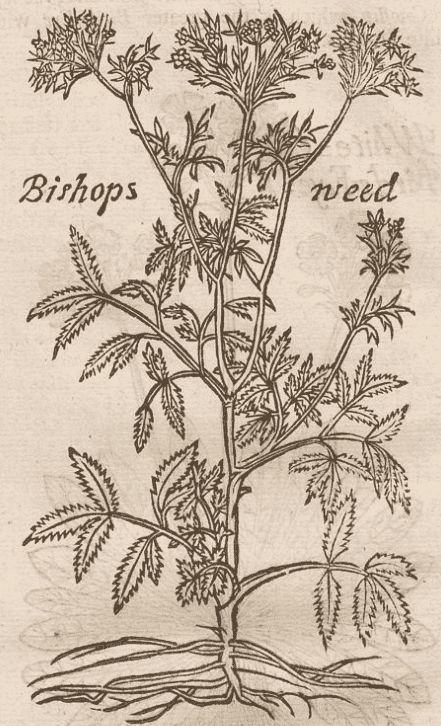
Salmon, Botanologia, 1710
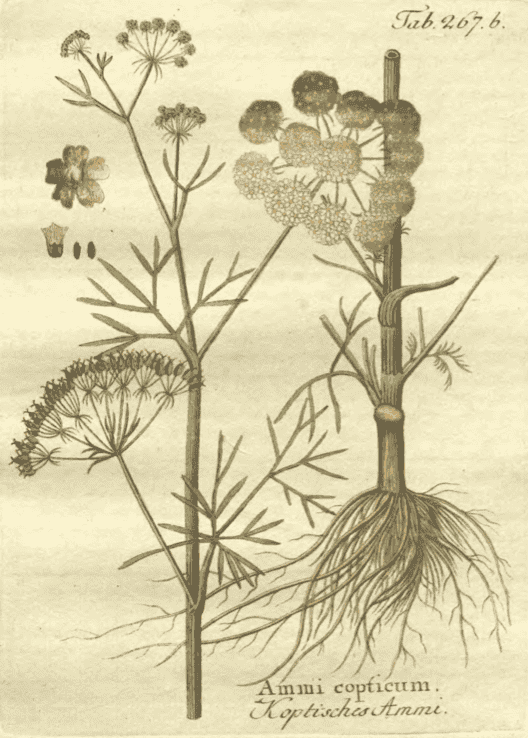
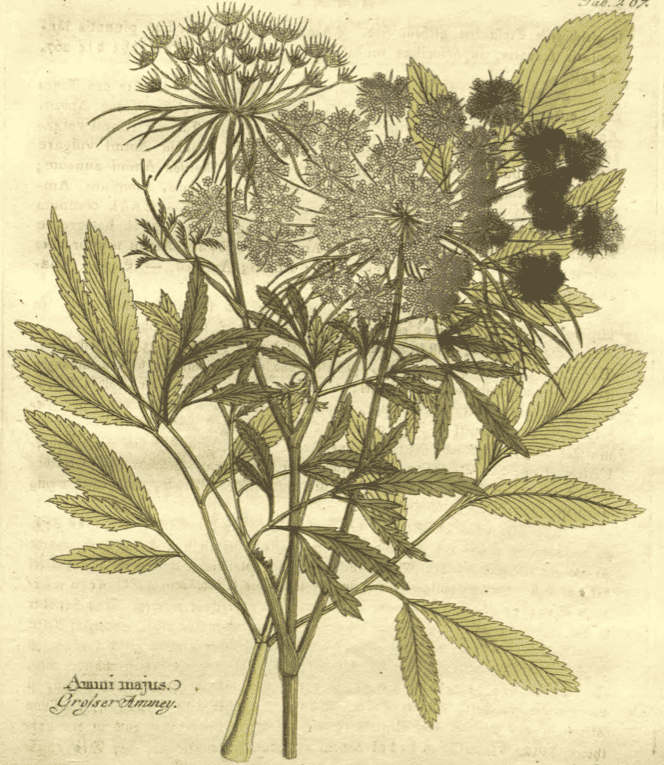
Left: Ammi copticum; Right: A. majus
Icones Plantarum Medcio-oeconomico, Vietz, 1806
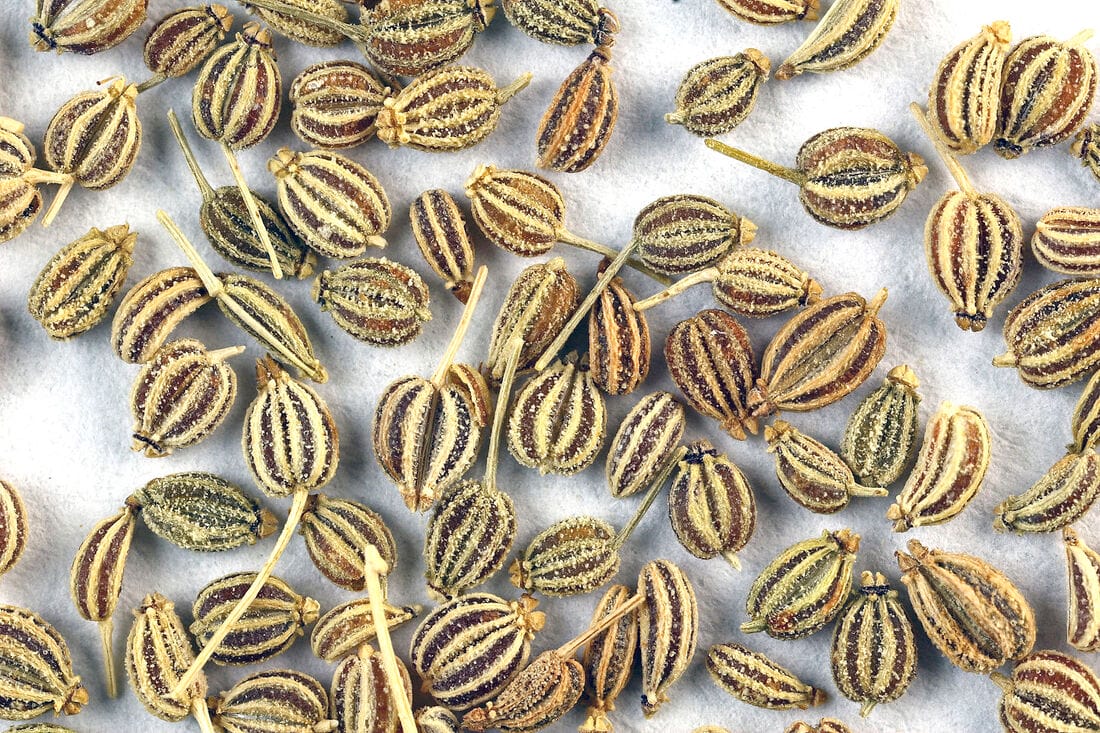
Trachyspermum ammi
(Photo by Sanjay ach) (Wikimedia)

Members CLICK HERE for the PRO VERSION
Botanical name:
Several plants supply Ammi:
1. Trachyspermum ammi (syn. T. copticum, Ammi copticum, Carum ajowan, Carum copticum)
2. T. roxburghianum
3. Ammi majus (syn. Apium ammi, Cuminum aethiopicum, Selinum ammoides; Sison pumilum; Visnaga vulgaris)
4. Ammi visnaga
That from Alexandria or Crete was regarded as best, which has a ‘taste between Oregano and Thyme’.
Parts used:
Seed
Temperature & Taste:
Warm, dry. Pungent
attenuating, cutting, aperitive, hysteric, carminative, cephalic, alexipharmic
Classifications:
Uses:
1. Warms the Stomach, Clears Wind and Damp:
-Flatulence, indigestion, colic
2. Clears Wind-Cold, Stops Cough:
-Cold, Flu, Fever
3. Resists Poison:
-Snake bite, Rabid Dog bit and bites of other venomous creatures
4. Clears Damp, Warms and Strengthens the Kidneys:
-Edema, Fluid retention
5. Moves the Blood, Promotes Menstruation:
-Amenorrhea, Dysmenorrhea
6. Moves the Blood, Settles Internal Wind, Stops Spasms:
-Hypertension, Epilepsy
7. Kills Worms
-adjunct
8. Externally:
-arthritic and Rheumatic complaints
-fresh herb beaten as a Cataplasm with honey for contusions, bruises
-Vitiligo
Dose:
Powder: 1–3 grams
Decoction in Water or Wine: 3–6 grams
Note:
1. The Seed is one of the 4 Lesser Hot seeds; It is used similarly to other seeds of the Apiaceae such as Fennel and Cumin.
2. Salmon said the two ‘Ammi’, native and foreign were equal in strength and properties.
Substitute:
1. Caraway (Waring)
2. Thyme and / or Oregano can replace in some instances
3. Tibetans in the Buryat region use one of the following for La la phud: i. Leditsia vulgaris fruits; ii. Bugipoda densiflora; iii. Azurea trilobata fruit;
iv. Sapozhnikovia diffusa seed (Mongolian & Buryat); v. Fennel seed
Main Combinations:
1. Cough and Breathlessness:
i. decoct Ammi, … available in PRO version
ii. Ammi with … available in PRO version
2. Nausea and Stomach weakness, decoct Ammi with … available in PRO version
3. Loss of Appetite, Ammi with … available in PRO version
4. Colic, Griping, Abdominal Spasms:
i, Ammi with … available in PRO version
ii. Ammi with … available in PRO version
iii. Ammi with … available in PRO version
5. Dysentery, Diarrhea with … available in PRO version
6. Pain of the Liver, Uterus, Stomach, Ammi with … available in PRO version
7. Amenorrhea, Dysmenorrhea:
i. Ammi with … available in PRO version
ii. Ammi with … available in PRO version
8. To promote Urine:
i. Ammi with … available in PRO version
ii. Ammi with … available in PRO version
iii. Ammi with … available in PRO version
9. Urinary stones:
i. Ammi with … available in PRO version
10. Infertility:
i. Ammi with … available in PRO version
ii. Ammi with … available in PRO version
iii. Ammi with … available in PRO version
11. Mental tension, Ammi with … available in PRO version
Major Formulas:
Decoction for Sterility (Quercetan)
Electuary of Rhubarb (Unani)
Expert Electuary of Catilinae
Electuary of Bayberries (Electuarium de Baccis Lauri)
Warming Confection for Infertility (Wirtzung)
Electuary to Promote Fertility (Wirtzung)
Powder of Cumin Greater (Nicholas)
Powder for Loss of Appetite (Nicholas)
Troches of Saffron (Nicholas)
Pills to Aggregate Greater (Mesue)
Pills to Promote Urine (Unani)
Pills for Retention of Urine (Wirtzung)
Cautions:
1. Phototoxic
Main Preparations used:
‘Bishop’s weed has been in use in India as a condiment and medicine from a very remote period; we find it mentioned by the early Sanskrit writers under the name of Yamani. It is the Nankhwah of Ibn Sina. The Persians call it Zinian and Nankhwah, a name derived from Nan, bread, and Khwah, desire, and given to it on account of its stimulating effect on the appetite. The author of the Persian Dictionary, Burhan-i-katia, gives Talib-el-khubz as the Arabic name, which is equivalent to the Persian Nankhwah. In the Makhzan-el-Adwiya, Kamun-el-muliki is given as the Arabic, and other writers again give different synonyms, so that there is a difficulty in deciding which of the notices in Arabic works have reference to this drug. As pointed out by Fliickiger and Hanbury, the fruits of Ammi majus, L., and Sison amomum, L., have often been confounded with it. The Tuhfat-el-muminin gives Ammi as the Greek name of Ajwan.
In native practice, Ajowan is much used as a carminative, either alone or in combination with rock salt, asafoetida, myrobalans, &c. It is also thought to check discharges of a chronic kind, and is therefore used in making lotions, collyria, &c.; upon the same principle it is prescribed in bronchitis with copious expectoration. A plaster or poultice of the crushed fruit is said to relieve pain. The Ark or distilled water of Ajowan is prepared and sold in the bazars.’ (Vegetable Materia Medica of Western India, Dymock, 1885)