Caragana, Mdzo mo shing མཛོ་མོ་ཤིང་
Shag-Spine Peashrub
Mdzo mo shing (Tibet)
Gui Jian Jin Ji Er or Zuo Mu Xing (TCM)
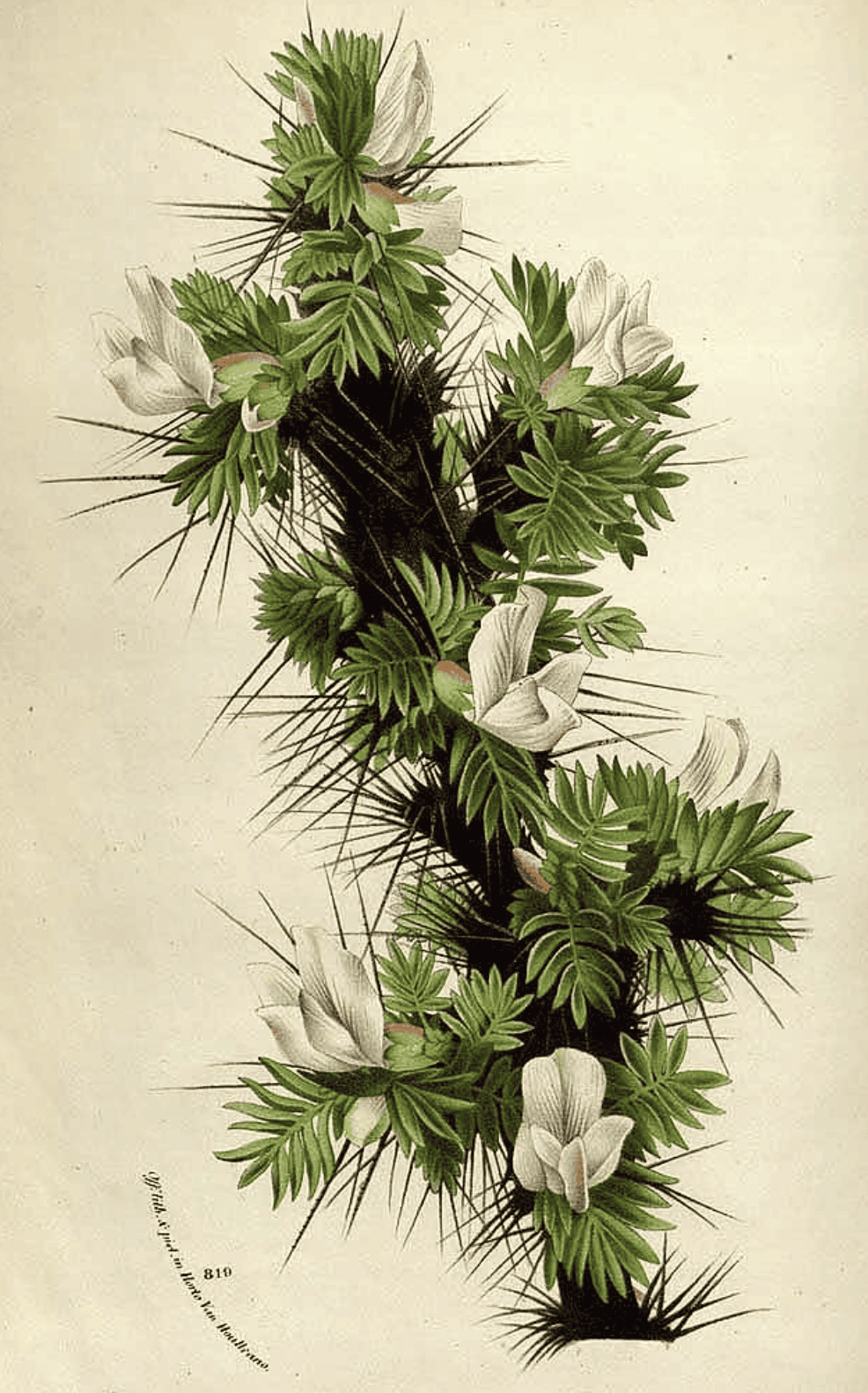
Caragana jubata
Van Houtte, L.B., Flore des serres et des jardin de l’Europe (1873)
Botanical name:
Caragana spp.
1. C. jubata (syn. Astragalus jubata, Aspalathus jubatus, Robinia jubata)
2. C. tibetica
3. C. changduensis
4. C. franchetiana
There are a number of different Caragana species used in Tibet and China, but they have slightly different properties.
Parts used:
Red Heartwood (Tibet)
Root, Branches (and leaf) (TCM)
Temperature & Taste:
Cool, dry. Sweet, Salty, slightly Bitter
Uses:
1. Clears Heat, Resolves Toxin:
–Cysts, Abscesses (Tibet)
–Breast Abscess, Toxic Sores, Boils, Abscess (TCM)
–used for Blood-Heat disorders
–Cough
2. Moves the Blood:
–enhances Blood circulation (Tibet)
–Amenorrhea, Dysmenorrhea
–Irregular and abnormal Menstruation (Tibet)
–Headaches
–Joint and Muscles Pain (Tibet)
–Rheumatic Arthritis
–Polycythemia
3. Calms the Liver, Settles Wind:
–Hypertension (TCM)
–atherosclerosis, hyperlipidemia
Dose:
2–3 grams
Substitute:
1. Red Sandalwood.
2. Caesalpina sappa (used in Mongolia)
Main Combinations:
1. To clear Heat and Toxin from the Blood, Caragana, Chebulic Myrobalan, Sarsaparilla, Frankincense
Major Formulas:
Caragana 6 Decoction (Mdzo mo drug thang)
Cautions:
None noted
Main Preparations used:
Nothing at Present