Catechu Wood, Seng ldeng སེང་ལྡེང༌
Seng ldeng (Tibetan)
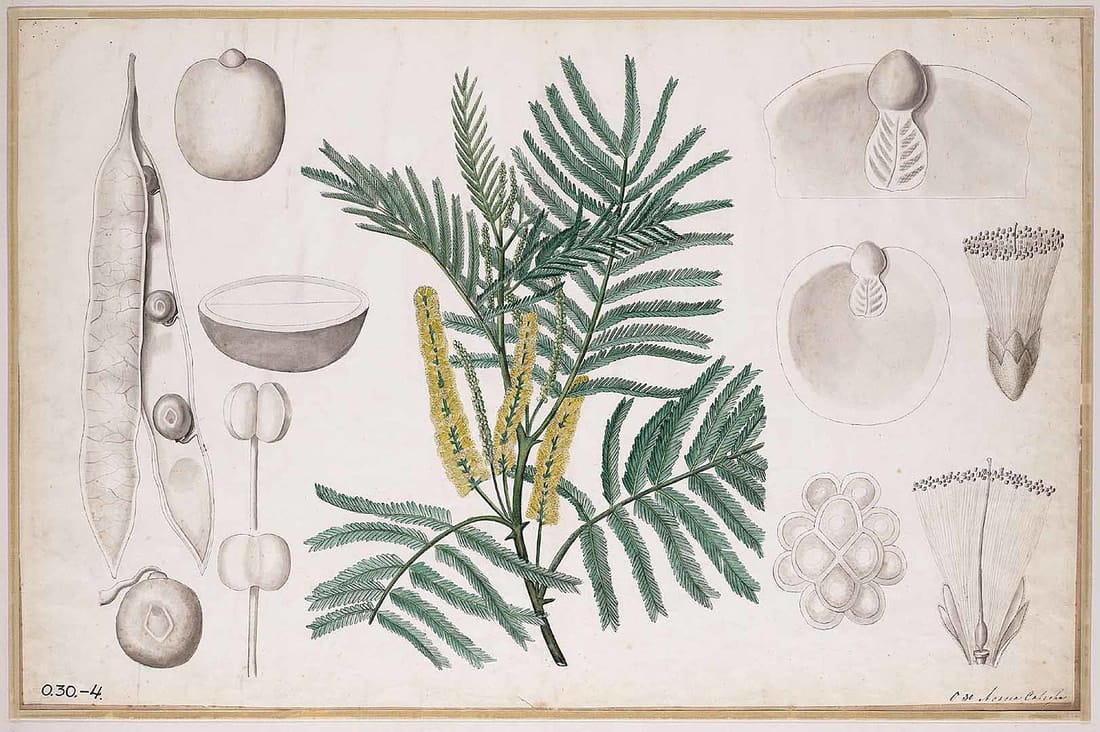
Acacia catechu
Botanische wandplaten, 1904–1914
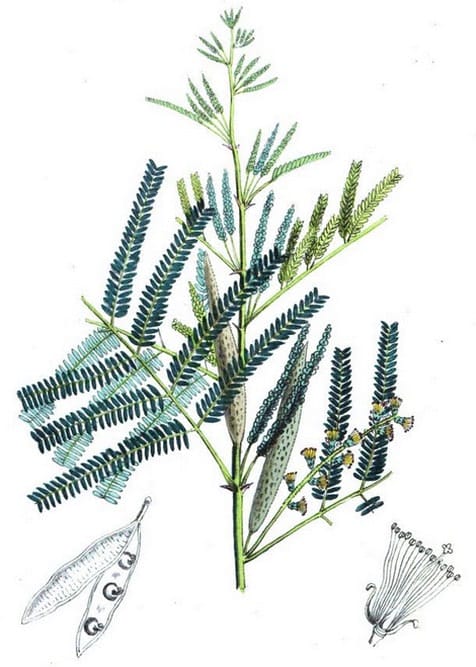
Acacia catechu
An Encyclopaedia of useful and ornamental Plants, Burnett, 1852
Botanical name:
A large number of plants supply Seng ldeng
White:
1. Acacia catechu
2. Cephalotaxus sinensis
3. Taxus yunnanensi (Gsom seng ldeng)
Red:
1. Xanthoceras sorbifolium (Tsan dan seng ldeng)
2. Caesalpinia sappan
Yellow:
1. Rhamnella gilgitica, R. forrestii, R. martinii
2. Rhamnus parvifolia, R. sargentiana, R. xizangensis, R. tangutica
3. Frangula crenata
The above is taken from A comprehensive review of Shengdeng in Tibetan medicine. Some of these species supply the Tibetan market at high altitude, others at medium altitude, while others are found at lower altitude. In general, Acacia catechu heartwood is listed by a majority of sources.
Tsering Norbu (Encylopedia of Myriad Herbs) says the Red variety is a species of Acacia, and is superior; the Yellow variety is A. catechu and is of middle quality, while the White is Cephalotaxus sinensis and is inferior.
Parts used:
Heart wood
Sometiems the concentrated decoction is used and this becomes Catechu Er Cha.
Temperature & Taste:
Cool, dry. Bitter, astringent
Uses:
1. Dries Damp, Settles Wind:
-Gout, Arthritis, Rheumatoid Arthritis
-Lymph disorders from Damp (Tibetan)
-“Dries up Blood and Chu ser [Lymph]”
2. Stops Bleeding:
-bleeding of the Lungs, Stomach, Bowels
-Uterine Bleeding
3. Clears Heat, Resists Poison:
-impure Blood; Carbuncles, Pruritis, Epidemic Disease (Tibetan)
-“severe pain from Blood disorder”
-Leprosy
4. Externally:
-paste is applied to Sores and Swellings
Dose:
In Pills or Powders: 1–3 grams
Substitutes:
1. Uncaria gambir gum is used synonymously in TCM.
2. Barberry bark is sometimes used in Nepal.
Main Combinations:
Major Formulas:
Catechu 4 (Seng ldeng 4) (Tibetan)
Catechu 23 (Seng ldeng 23) (Tibetan)
Catechu 25 (Seng ldeng 25) (Tibetan)
Aloeswood 11 (A gar bcu gcig)
Costus Garuda (Ru khyung) (Tibetan)
Garuda of Camphor (Spos khyung bco lnga) (Tibetan)
Garuda 8 (Khyung lnga mchu sder can) (Tibetan)
Rhubarb 8 Ointment (Zab lag brgyad pa) (Tibetan)
Safflower Garuda (Gur khyung phyag rdor)
Cautions:
None noted. It is very dry, so should be used cautiously in Yin deficiency.