Colocasia, Taro
Egyptian Bean, Wild Taro
Ye Yu (TCM)
Alupam (Ayurveda)
Arvi (Unani)
Qulqas (Arabic)
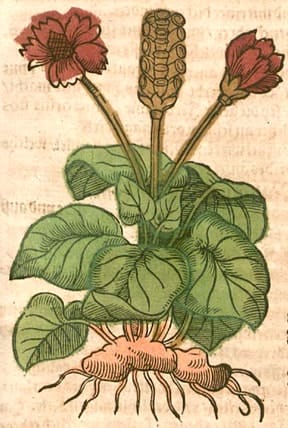
Krauterbuch, Lonitzer, 1578
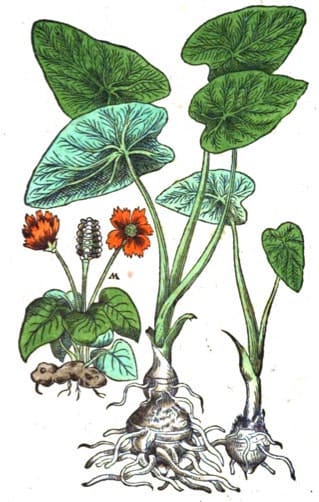
Kreutterbuch, Matthiolus, 1586
Botanical name:
Colocasia esculenta (syn. Arum aegyptiacum, A. colocasia)
Parts used:
Dried Rhizome
Temperature & Taste:
Toxic when fresh; Seed is also regarded as Toxic
Uses:
1. Clears Heat, Resists Poison, Resolves Swelling:
-Toxic Sores and Swellings, Boils, Abscesses, Carbuncles
-Breast Abscess
-Cough, Whooping Cough
-Leprosy
2. Clears Stasis:
-Neuralgia
-Trauma and Bruising
3. Benefits Stomach, Relieves Hunger:
-useful for indigestion and debility
-used by Daoists to relieve hunger when abstaining from grains
-given in diet for Consumption
4. Externally:
-fresh root plaster or fomentation is used for Arthritis, Gout, Rheumatism
-Bee Sting, Centipede Bite (root, leaf or stalk applied topically)
-strong decoction is used as a wash for Lice
Dose:
When cooked, it is eaten as food
Main Combinations:
Cautions:
None noted
The fresh, raw root is irritating; Seeds are toxic