The Remarkable Cordyceps
Photos: Adam Tate 2012–2015; and forwarded from Tibetan friends in far Western Sichuan, 2015.
See also the Cordyceps Monograph
Introduction
Cordyceps are one of the truly amazing medicines of Traditional Medicine. The Chinese name, Dong Chong Xia Cao, means ‘Winter Worm Summer Grass’. The name comes from the life cycle of a parasitic fungii which infects a type of worm, eventually killing it where a thin herb-like filament will rise up like a piece of grass. It is used in all medicine systems of the Himalayas where it is found
It is viewed as a potent tonic medicine, capable of restoring Kidney Yang, nourishing Yin and Jing (Essence), and restoring Qi. It is especially good to strengthen the Lungs and can be taken for the symptoms of altitude sickness.
In Tibet, Nepal and Western China in particular the trade in Cordyceps is huge. Each Summer, local towns and cities in these areas are flooded with gatherers coming back from high in the mountains with their bounty for sale in town squares. From here, large amounts are brought back to centers such as Kathmandu and Chengdu to be graded and sorted, and sold at large profit. In July, 2015, fresh, locally gathered medium-quality Cordyceps were being sold in Seda, Western Sichuan, for around $2 each, each piece weighing perhaps half a gram.
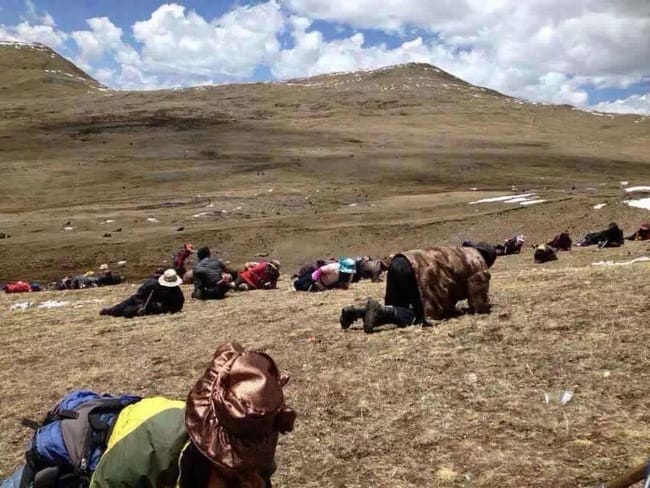
Local Tibetans in far Western Sichuan province collecting Cordyceps in May, 2014 (approx. 3500–3800 meters). The elusive Cordyceps are hard to find amongst the grass meaning that the harvesters must crawl on hands and knees for hour after hour. Once the small, black, grass-like fungus is found, the caterpillar buried in the soil must be carefully dug out. Broken Cordyceps sell at a much lower price.
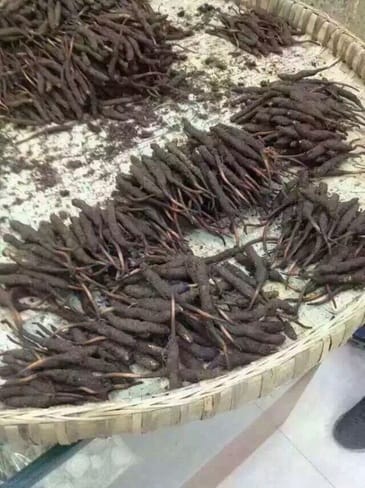
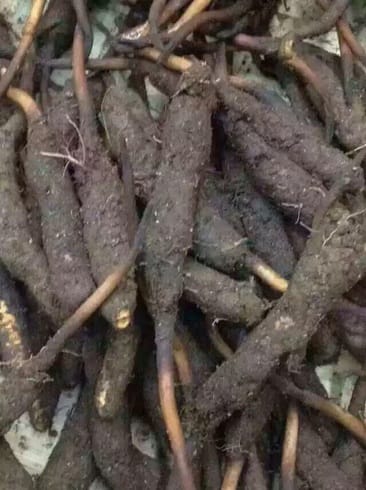
A successful mornings work! Freshly harvested uncleansed Cordyceps.
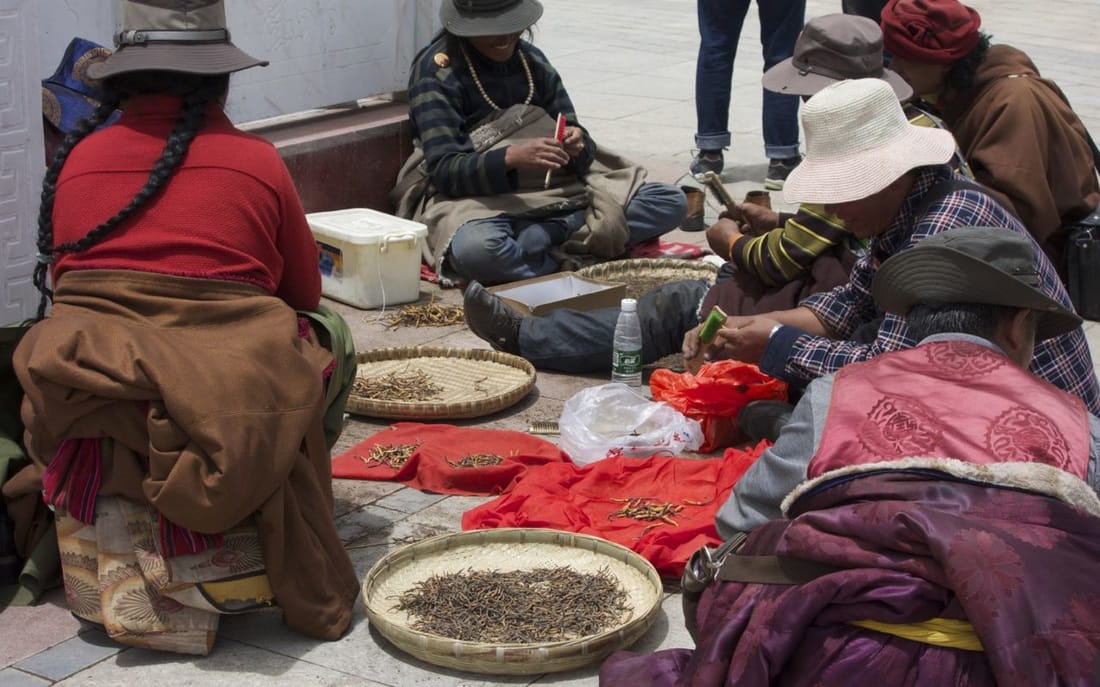
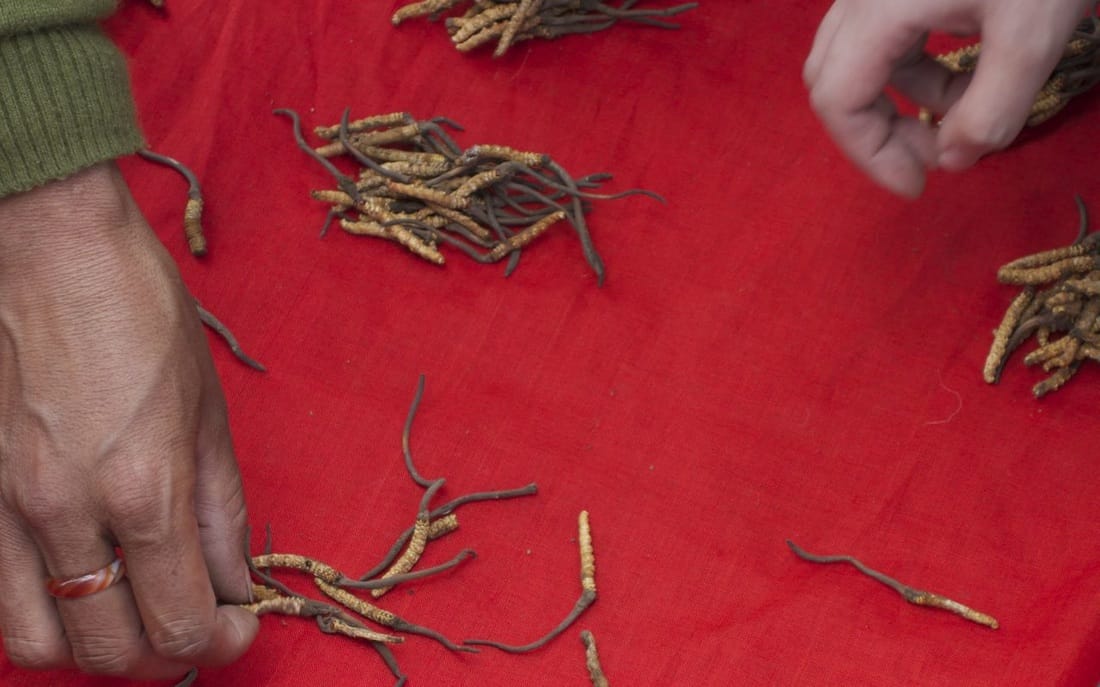
After harvesting the Cordyceps high in the mountains, Cordyceps are taken to the town square in Seda, Western Sichuan. The Cordyceps are cleansed of their dirt using fine wire brushes (left). They are then sorted into various grades (right).
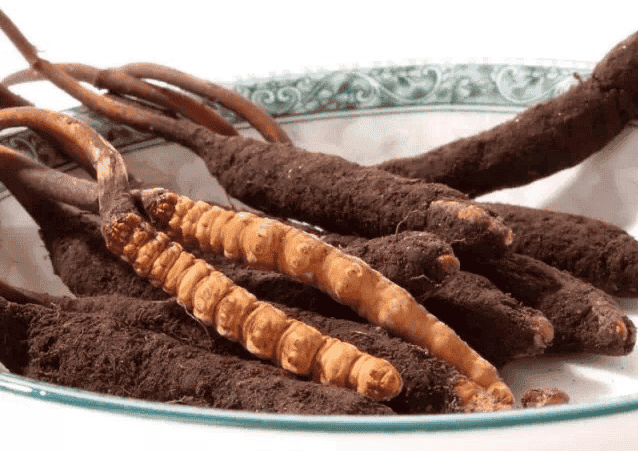
A close-up showing fresh Cordyceps before and after scrubbing off the dirt.
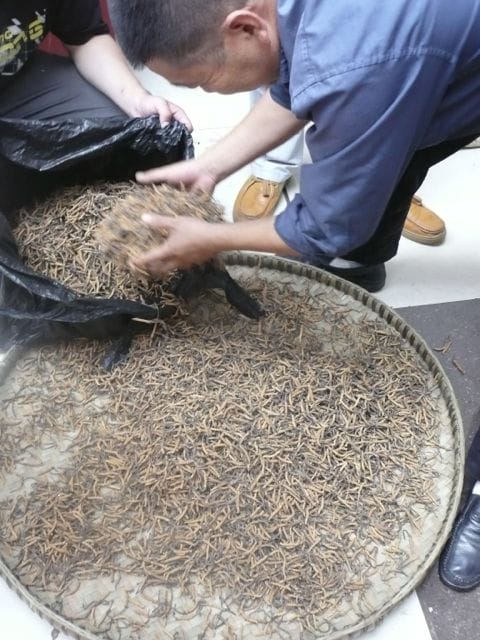 Approximately 5KG of Cordyceps being traded Approximately 5KG of Cordyceps being traded at HeHuaShi Medicine Market in Chengdu (2014). | 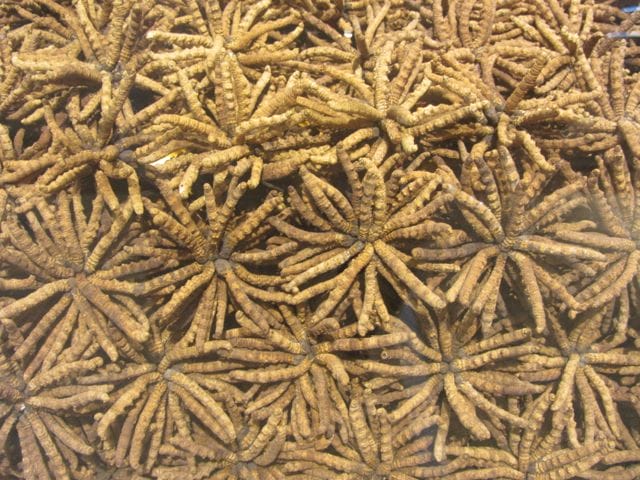 Once graded, the Cordyceps are typically tied into bunches of uniform weight. Once graded, the Cordyceps are typically tied into bunches of uniform weight.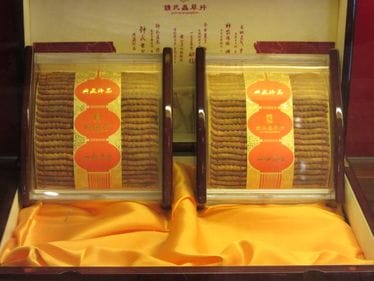 The highest qualities are specially packaged for sale at premium prices. These first-grade Cordyceps are sold in wooden display cases at a cost of up to US$1000. |
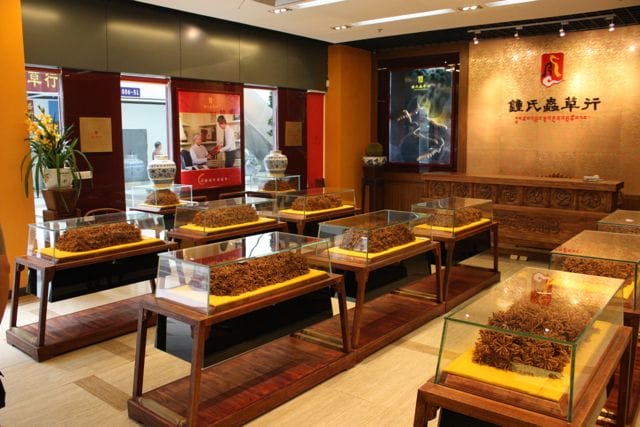
One of the Shops specialising in Cordyceps at the Chengdu He Hua Chi Chinese Herbal Medicine Market. Each display case contains different grades of Cordyceps, the best qualities worth more than their weight in gold. Such specialty stores have X-ray machines in-store to prove to buyers that no metal or lead has been inserted into the Cordyceps to increase weight, a common problem on the market. Counterfeits, adulteration and manipulation of the weight of Cordyceps is a major problem.
You May Also Like:
Cordyceps Monograph
Fungal Materia Medica
Primary Uses of Medicinal Fungi
Medicinal Polypores