Cyanus, Blue-bottle or Cornflower
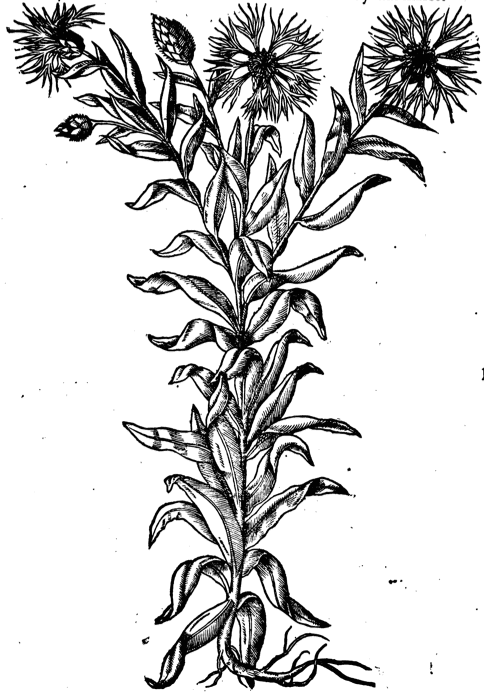
New Kreuterbuch, Matthiolus, 1563
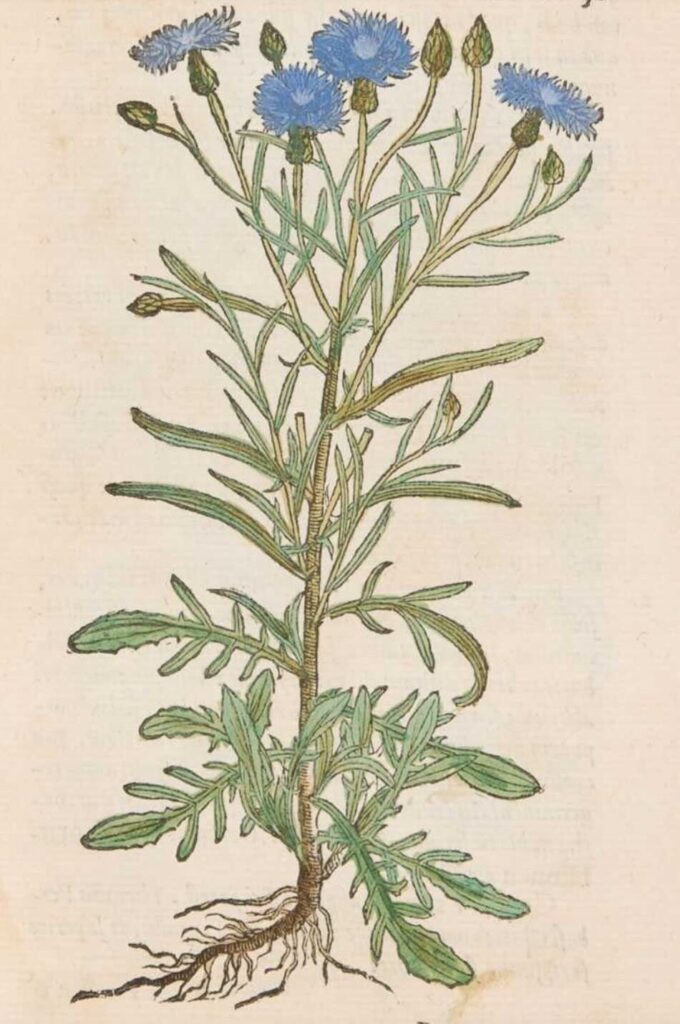
Florum, et coronariarum odoratarumque nonnullarum
herbarum historia, Dodoens, 1569
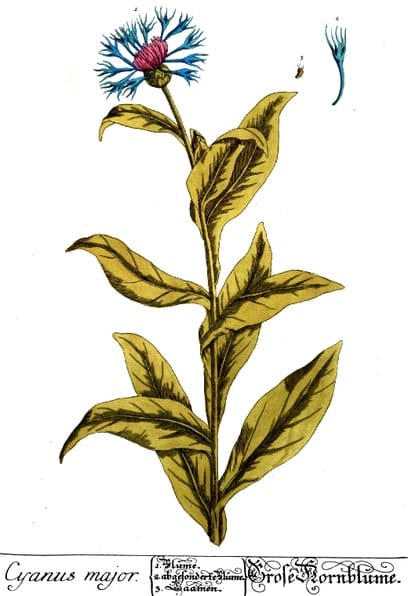
Herbarium Blackwellianum, 1750
Botanical name:
Centaurea cyanus (syn. Cyanus major, Cyanus cyanus)
Great, Common, Double, Small-leaved, Mountain and Creeping types were used.
Parts used:
Flower
Temperature & Taste:
Cool, dry. Bitter
Classifications:
Astringent, Opthalmic, Cardiac, Alterative, Alexipharmic
Uses:
1. Clears Wind-Heat, Resists Poison:
-Fevers
-given for venom including bites of Scorpion, Spiders, Rabid Dogs, Vipers
-various Poisons
-Epidemic diseases, Plague (seed or flower)
2. Clears Heat, Brightens the Eyes:
-red, inflamed and painful Eyes
-flowers, juice or distilled water topically
3. Clears Heat, Moves the Blood, Stops Bleeding:
-blood stagnation and bruising, internal Trauma
-ruptured Veins, hematoma
-Spitting Blood and other types of Bleeding from Heat
4. Promotes Urine:
-Edema, Fluid retention
5. Externally:
-applied to fresh Wounds
-ulcers and sores of the Mouth (juice)
-dropped into the ears for pain and inflammation of them
Dose:
Long Infusion or Decoction: 3–6 grams
Or a pugil (3-finger pinchful) per cup of boiling water.
Main Combinations:
1. Bleeding or Trauma: take Cornflower with Comfrey
2. Bleeding. Cornflower with Shepherd’s Purse, Plantain
3. Spitting of Blood, Cornflower with Comfrey, Plantain, Horsetail
4. To move the blood after Trauma, take with Calendula and Yarrow
5. Red Inflamed Eyes, Cornflower with Eyebright
6. Fever in Children, Cornflower with Camomile and Mint
Cautions:
None noted
Main Preparations used:
Distilled water of the Flowers