Echium, Viper’s Bugloss
Vipers Bugloss, Snake’s Head, Bugloss, Blueweed
Akhiyun (Unani)

Botanical name:
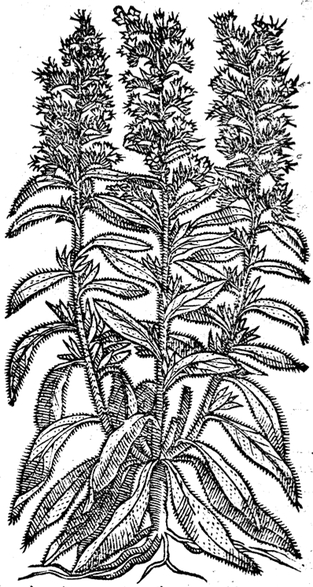
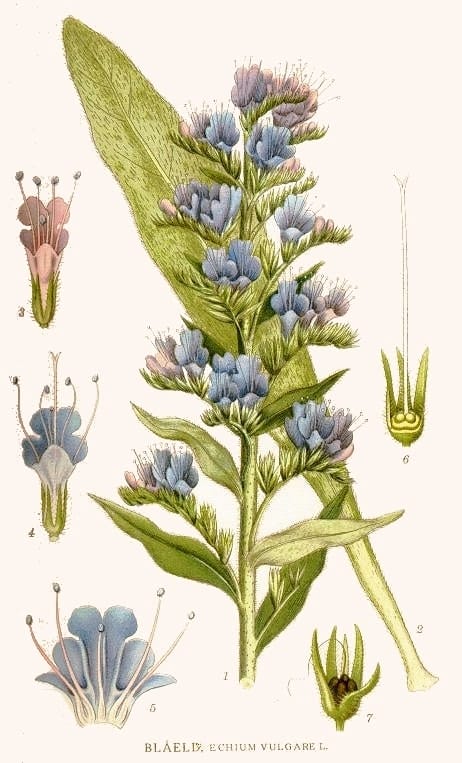
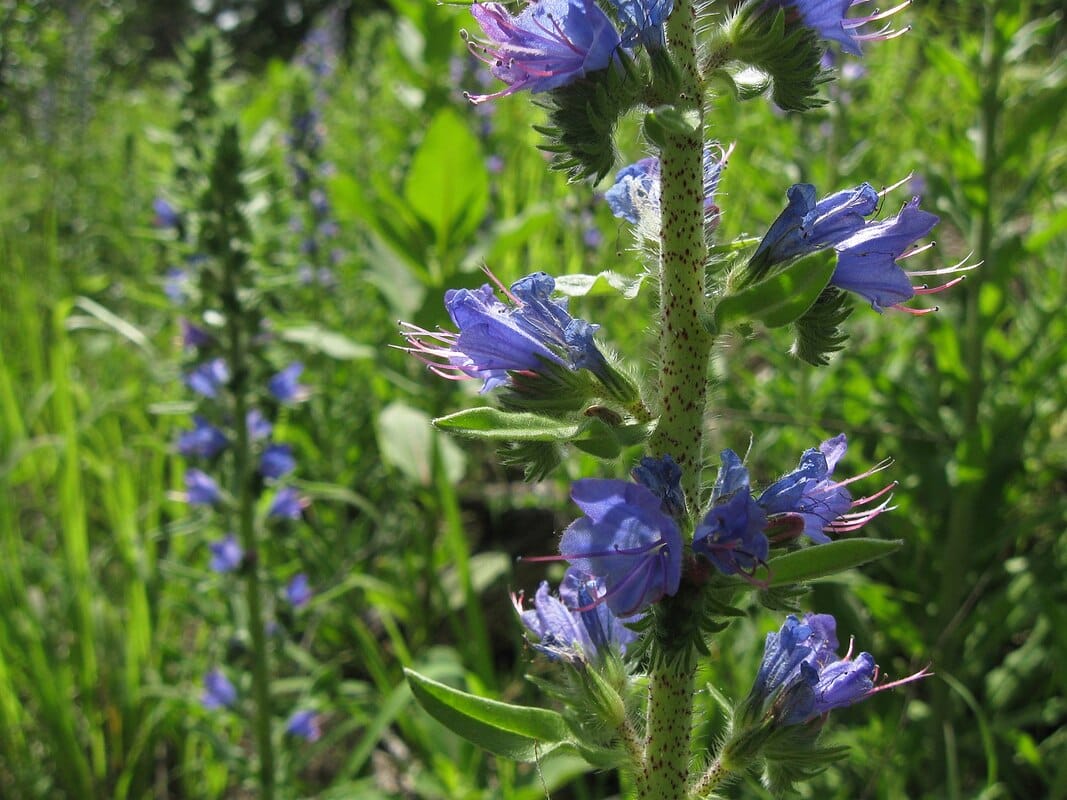
Echium vulgare
Related species including Echium plantagineum (Purple Vipers Bugloss) and E. rubrum (or South Eastern Europe) are used similarly.
Parts used:
Root; Leaf; Flowers
Temperature & Taste:
Neutral, dry. Sweet
Clasifications:
Uses:
1. Clears Heat, Resists Poison:
-Fevers, chronic Fever
-in Wine for Snake bites and the bites of all venomous Beasts; Bees, Wasps, Scorpions etc.
-defends the Heart from Poison
-“The Root drunk in Wine helps the biting of Serpents and all venomous Beasts”. (Salmon)
2. Cordial; clears Heat from the Heart:
-Melancholy, Pensiveness
-used for Heart Fire
-“Exhilarates the Heart”. (Salmon)
-“The flowers “comfort and revive the heart wonderfully, being a very great Cordial”. (Salmon)
3. Promotes Breast Milk
-traditionally to promote and improve beast milk
4. Benefits the Kidneys:
-traditionally for lower back pain
5. Externally:
-the root was chewed and applied to Sores
-the distilled water is used as a wash for Sore, Red and Inflamed Eyes.
-topically to Bee and Wasp stings, Snake and Scorpion bites
-the ashes of the herb boiled in Honey water is used for Sores and Ulcers of the Mouth and Throat, used as a gargle.
Dose:
Should not be used internally for more than 2–3 weeks without a break.
Powder of the herb, root, or seed: 1–2 grams
Decoction: 2–5 grams
Substitute:
Used similarly to Borage and Bugloss.
Main Combinations:
1. Heat of the Blood, Viper’s Bugloss with Fumitory
2. To preserve from Contagion, Roots of Elecampane, Angelica, Cyperus, Zedoary, Avens, Contrayerva, Materwort, Valerian, Vipers Bugloss (½ oz. each), fresh Orange and Lemon peel, Clove, Cinnamon, Galangal, Juniper, Bay berry, Sage, Rosemary, Rue (2 drams each), Vinegar (7 lbs.). Macerate for a month in a warm place, express strongly, then add Theriac (7 oz.), Macerate for a month, and filter. Dose: a spoonful every morning. (Dispensatorium medico pharmaceuticum Palatinatus, 1764)
Cautions:
A relative of Comfrey and Borage, it contains similar alkaloids which can potentially be harmful. Avoid overdose and long-term use.
1. Should not be used internally for more than 2–3 weeks without a break.
2. Should not be used in those with Liver disease.
Main Preparations used:
Dioscorides:
“Some people cal it Döris, others Alkibiádeion. It is a plant with rough leaves, oblong and thin like those of ánchusa (Anchusa tinctoria), but smaller. They ooze a certain fluid which sticks to the hand. On the leaves there are small thorns like downy hairs. The plant has small thin branches on either side of the stalk (and small leaves). One of the branches has smaller leaves than the others. Near the leaves there are purple blossoms carrying fruits which resemble, as to their shape heads of serpents. Its root is thinner than a finger and of a blackish colour. Its root when taken with wine soothes backache and is a galactagogue”.
1. Antioxidant Properties and Reported Ethnomedicinal Use of the Genus Echium (Boraginaceae)
2. Comparative analysis of the main medicinal substances and applications of Echium vulgare L. and Echium plantagineum L.: A review.
3. Extraction, antioxidant and antilisterial activities of polysaccharides from the flower of viper’s bugloss.
4. In vitro effects of rosmarinic acid on glutathione reductase and glucose 6-phosphate dehydrogenase.
5. Antioxidant activity of selected plant species; potential new sources of natural antioxidants.