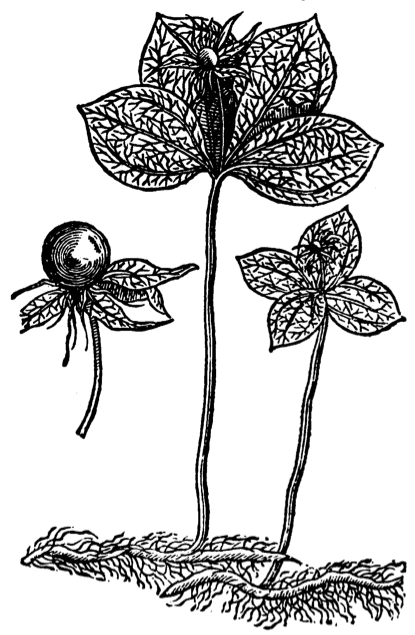
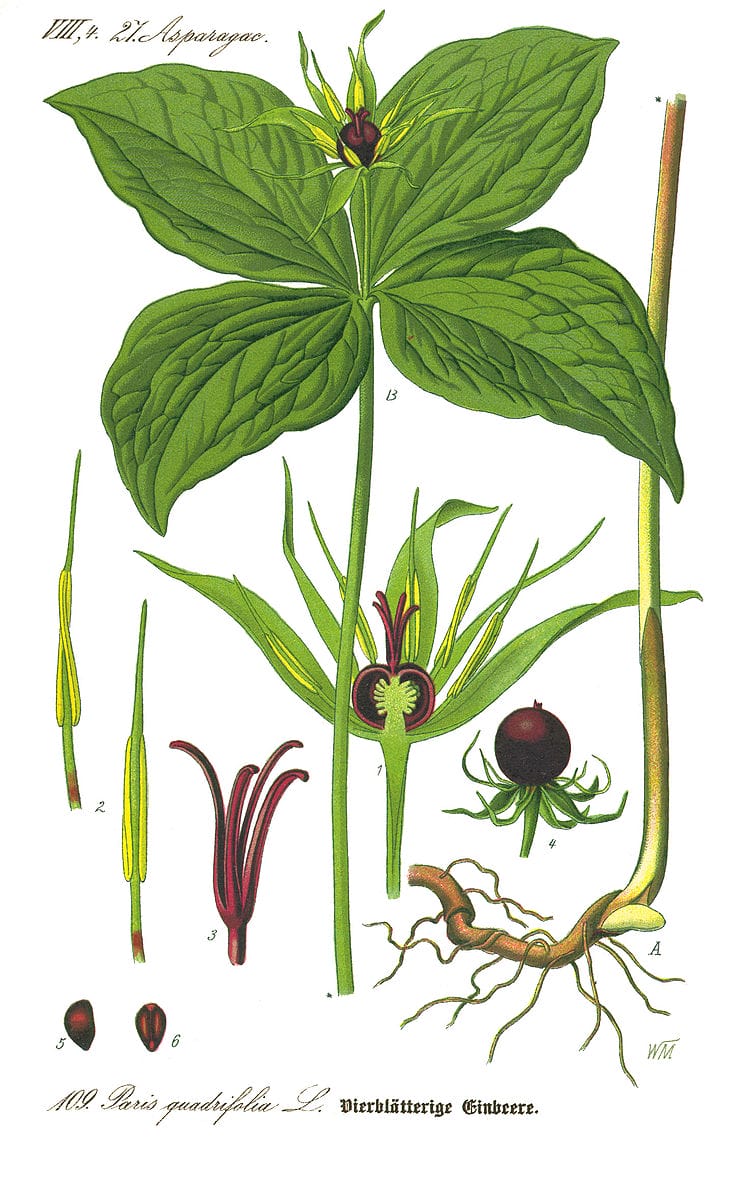
Herba Paris, Herb True-love, Chong Lou 重楼
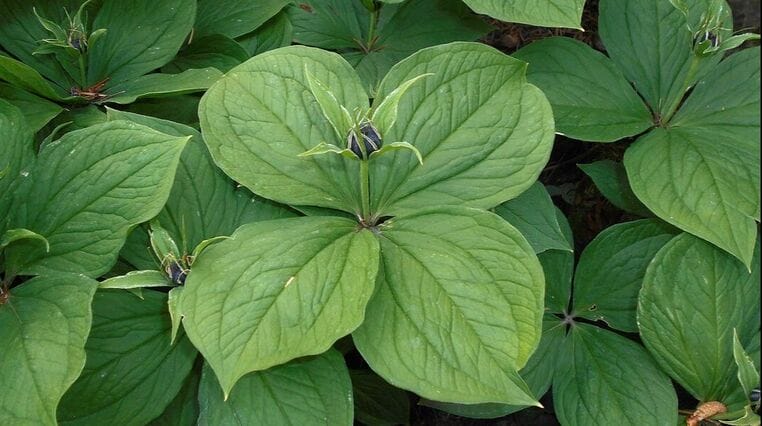
Herb Paris, Four-leaved Nightshade, One Berry
Aconitum pardalanches, Uva Ursa, Uva Lupinus, Solanum furiosum
Chong Lou (also known as Zao Xiu) is the Chinese Paris root
Lo ma bdun can dwa ba ལོ་མ་ བདུན་ ཅན་ དྭ་བ་ (Tibetan)


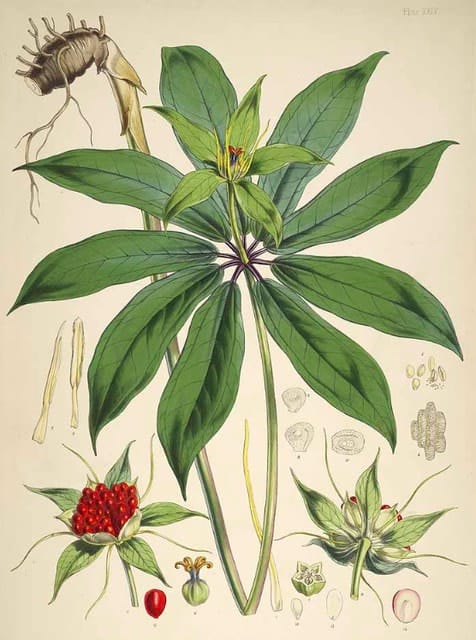
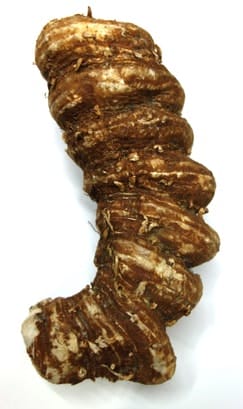
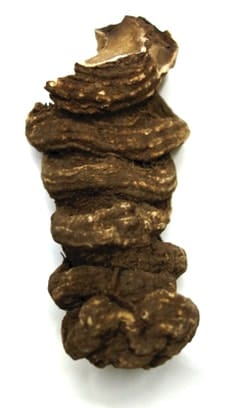
Wild Paris roots (P. polyphylla) at the Chengdu Herb market;
these roots are approximately 5cm across and are relatively expensive. (Adam, 2016)
Botanical name:
Paris spp.
1. P. quadrifolia (West)
2. P. polyphylla (TCM)
i. P. polyphylla var. chinensis
ii. P. polyphylla var. yunnanensis
Parts used:
Root, Fruit, Leaf
Temperature & Taste:
Cold, dry. Bitter, Sweet. Mildly Toxic
Classification:
Uses:
1. Clears Wind and Heat, Resists Poison (TCM, West):
-taken against the Plague, Epidemic Diseases (both to preserve from and cure)
-Sore Throat, Cough, Cold, Fever, Whooping Cough (TCM, West, Tibet)
-Mumps, Rabies
-“chills and Fever in Cholera” (Li Shi Zhen)
-Poisons including Aconite, Nux Vomica, Arsenic, Mercury (Herb, Berry)
-‘oppresses Realgar, Cinnabar, Borax and Salt’. (Da Ming, TCM)
-Snake Bite (Li Shi Zhen)
2. Clears Wind and Heat, Stops Spasms (West, TCM):
-Childhood Convulsions and Spasms related to Febrile disease
-Dizziness, Vertigo, Migraine
-Head wagging and tongue moving (traditional TCM indications)
-Mania (West)
-“treats Depressive Psychosis” (Ben Cao Gang Mu)
3. Moves the Blood, Clears Stasis, Resolves Masses (West, TCM):
-Trauma, Bruising
-Pain of a fixed nature
-Chest pain (Tibet)
-Scrofula
-Tumors and Cancers (inc. Liver, Stomach, Lung, Breast)
-Saponin content is principally responsible for anti-cancer effect and has been well proven
4. Clears Phlegm, Promotes Vomit:
-smaller doses dissolve Phlegm and clear Damp
-Emetic in full doses (30–50 grains of the root)
5. Kills Worms:
-traditionally used for Worms (TCM, Tibet, West)
-‘purges the Three Worms’ (Li Shi Zhen)
6. Externally:
-externally the leaf is applied to Plague sores, hot Tumors, Felons, old Ulcers
-Tumors and Swellings of the Groin, Testicles or Genitals, or to any other part of the body (leaf)
-juice is applied to Felons, and Abscesses in the nail bed
-Heals Wounds (Tibet)
Dose:
300mg–1 gram of the root or whole herb in powder or pills;
Decoction: 3–9 grams
Full doses in decoction of 9 or more grams may induce vomiting
Preparation:
The roots were usually steeped in vinegar for 24 hours, then dried for use. (West)
Substitute:
Bistort root is similar in nature and taste and has been used as an adulterant to Paris root in China. However, both excel in clearing Heat and Poison so it is an acceptable substitute for some indications.
Main Combinations:
1. Plague and Epidemic diseases, Herb Paris with Angelica, Nettle, Marshmallow, Valerian (as in Saxonian Powder)
2. Sores, Abscesses, Paris Chong Lou with Coptis Huang Lian and Lonicera Jin Yin Hua (TCM)
3. Tonsillitis, Paris Chong Lou with Scutellaria Huang Qin and Scrophularia Xuan Shen. (TCM)
4. Liver Wind (Epilepsy, Dizziness, Convulsions), Paris Chong Lou with Paeonia Bai Shao, Gastrodia Tian Ma (TCM)
5. Childhood Convulsions, Paris Chong Lou with Uncaria Gou Teng, Cicada slough (Chan Tui)
6. Snakebite:
i. mix the powder with vinegar and apply. (Su Gong)
ii. Paris Chong Lou with Hedyotis Bai Hua She She Cao, Scutellaria Ban Zhi Lian (TCM)
Major Formulas:
Saxonian Powder
Calm the Shocked Mind 20 Pills (Mogolian)
Cautions:
1. Not used during Pregnancy
2. Avoid overdose.
3. “It generates and increases Melancholy, because of which these people [Melancholics] should avoid this herb and root … All men who are naturally cold or fickle, should avoid this herb, and especially women”. (Dorsetn, 1540)
Toxicity:
Toxic doses may result in diarrhea, headache, nausea, stomachache, vertigo, and vomiting. The berries are most toxic