Honey, Mel, Feng Mi 蜂蜜
Feng Mi (TCM)
Sbrang rtsi སྦྲང་རྩི (Tibetan)

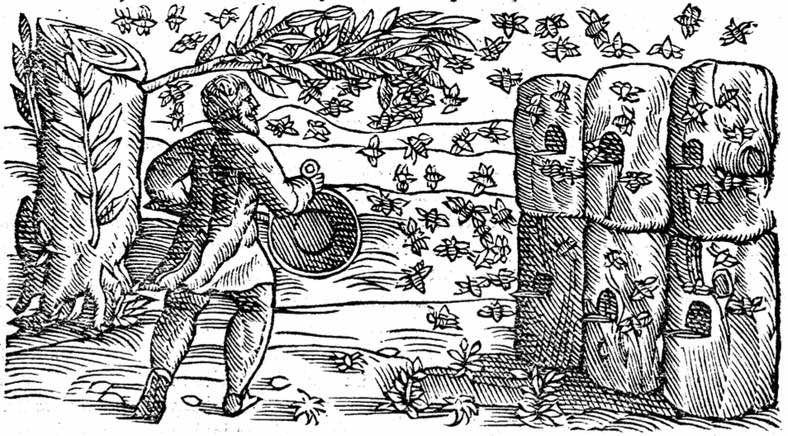
Dioscorides Materia Medica, Mathias, 1563
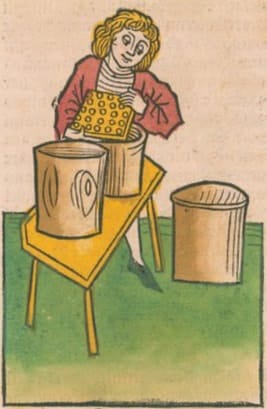
Honey
Ortus Sanitatis, Meydenbach, 1491
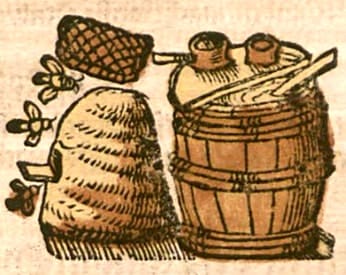
Honey
Krauterbuch, Lonitzer, 1578

Members CLICK HERE for the PRO VERSION
Entomological name:
Apis spp.
- A. mellifera, Western Honey Bee,
- A. cerana, Eastern Honey Bee
These are the two main species of domesticated Honey Bees. Other wild and Stingless Bee species have been used.
Parts used:
Honey, raw or clarified
Temperature & Taste:
Warm, Sweet.
Uses:
1. Nourishes and Moistens the Lungs (West, TCM, Ayurveda):
-chronic, dry-type Cough
2. Benefits Digestion, Strengthens the Spleen, Tonifies the Qi:
-promotes strength
3. Resists Poison, Clears Toxins:
-antidote to Mineral, Vegetable and Animal poisons.
4. Benefits the Heart:
-Heart Disease, Angina
5. Clears Phlegm:
-clears Phlegm (being one of the few sweet things that doesn’t increase Phlegm).
6. Promotes Healing:
-internal and external ulcers
7. Benefits the Eyes:
-inflammations, conjunctivitis
8. Yogavaha:
-increases the medicinal effects of medicines which it is added to (Ayurveda)
9. Externally:
-applied to wounds, sores, shingles, herpes, skin disorders including eczema, as well as burns and scalds, to help promote healing.
Dose:
10–30 grams, up to three times daily
Correctives:
Substitutes:
Preparation:
Main Combinations:
1. To strengthen the Lungs and relieve Thirst, … available in PRO version
2. To prepare and cut through tough Phlegm, … available in PRO version
3. Insomnia; … available in PRO version
4. Difficult labor and transverse presentation, … available in PRO version
5. Bruising, … available in PRO version
6. Obesity: … available in PRO version
7. Leprosy; … available in PRO version
8. Toxic boils and abscesses, … available in PRO version
9. Indolent Ulcers, prepare a plaster of … available in PRO version
10. To promote hair growth, … available in PRO version
Cautions:
1. ‘Not only Hippocrates but all physicians say that Honey is bad in Bilious diseases but good in old Age … Honey is good for an old Man and not for a young one, that it is harmful for those that are naturally Bilious, and serviceable for those who are Phlegmatic. In a word, in bodies which are warm either through nature, disease, time of life, season of the year, locality or occupation, Honey is productive of Bile, whereas in opposite circumstances it produces Blood’. (Galen, ‘On the Natural Faculties’, 170AD)
2. Honey should not be used in chronic diarrhea.
3. Ayurveda says Honey should never be heated. Cooking is said to slow its digestion, congest the mucus membranes and subtle energy channels: ‘Uncooked Honey is Nectar; Cooked Honey is Poison’. However, when clarified, the toxic nature of heating honey is removed.
4. Hildegard said Honey creates Fat and Pus in fat people if overeaten.
Main Preparations used:
Hydromel, Oxymel, Tincture