Iberis, Bitter Candytuft
Wild Candytuft, Rocket Candytuft, Annual Candytuft, Clown’s Mustard
Qu Qu Hua 屈曲花 (TCM)

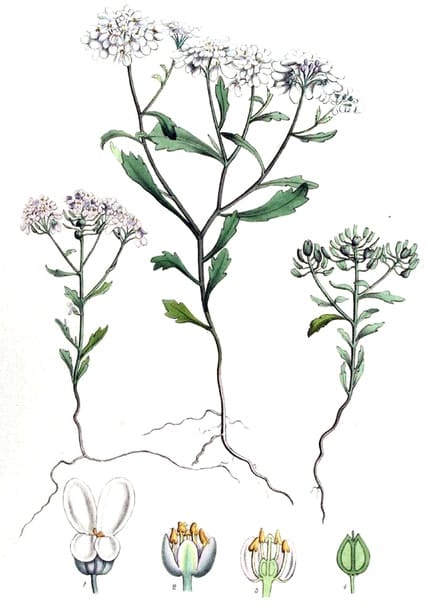
Iberis amara
Kops, J., Flora Batava (1800-1934)
Botanical name:
Iberis amara (syn. Thlaspi amarum, Crucifera iberis)
Parts used:
- Whole Herb in flower
- Seed (stronger, most used)
Temperature & Taste:
Warm, dry. Bitter
Uses:
1. Clears Cold and Damp, Promotes Urine:
-Edema, fluid swelling
-Gout, Rheumatism
2. Stops Cough:
-Bronchitis, Asthma
3. Moves the Blood, Regulates the Heart:
-enlarged Heart, Endocarditis, Pericarditis
-increases Cardiac output
-Cardiac Hypertrophy (American Medicinal Plants, Millspaugh, 1887)
-Palpitation, Arrhythmia, Angina
-also for Vertigo, Neurosis
4. Promotes Digestion:
-bitter tonic
-promotes secretion of bile and gastric juice
-Gastrointestinal diseases including Irritable Bowel Syndrome
Dose:
Powdered Seed: 1–3 grains (65–200mg)
Main Combinations:
1. Gastrointestinal disorders including Irritable Bowel Syndrome, Candytuft, Angelica, Caraway, Camomile, Lemon Balm, Celandine, St. Mary’s Thistle, Peppermint, Licorice (this is a patent medicine sold under the name Iberogast)
Cautions:
1. Avoid in Pregnancy and Breastfeeding
Toxicity:
Toxic in overdose due to cucurbitacins. Large doses irritates the intestines and promote diarrhea. The seed is highest in cucurbitacins.
Main Preparations used:
GENERAL / REVIEW
–[Iberis amara L. (bitter candytuft)–profile of a medicinal plant]
ANTIOXIDANT
–Antioxidative properties of Iberis amara extracts in biochemical model reactions.
ANTI-INFLAMMATORY
–Mechanisms Involved in the Anti-inflammatory and Vascular Effects of Iberis amara Extract.
GASTROINTESTINAL
–Iberis amara L. and Iberogast–results of a systematic review concerning functional dyspepsia.
–[Drugs with Iberis amara as a modern phytotherapy to treat chronic functional disorders of the gastrointestinal tract].
–[Dyspeptic pain and phytotherapy–a review of traditional and modern herbal drugs].
CANCER
–Iberis amara Extract Induces Intracellular Formation of Reactive Oxygen Species and Inhibits Colon Cancer.