Mimosa, Sensitive Plant
Lajjaalu (Ayurveda)
Thottalsurungi (Siddha)
Chuyimuyi, Lajwanti (Unani)
Han Xiu Cao (TCM)
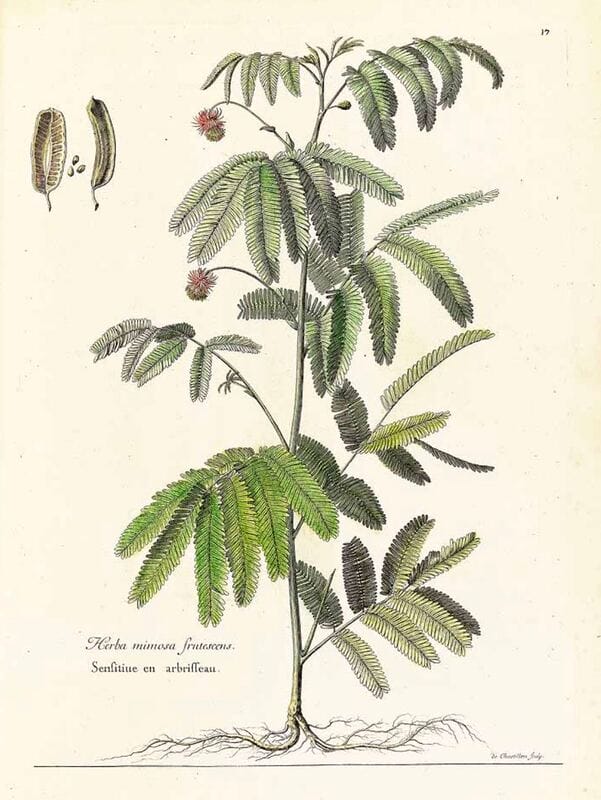
Dodart, D., Recueil des plantes gravées par ordre du roi Louis XIV (1788)
Botanical name:
Mimosa pudica (syn. Mimosa aspirata)
Parts used:
Whole Plant; root is also sometimes used
Temperature & Taste:
Cool, dry (Considered mildly Warm in Unani)
Uses:
1. Clears Heat, Resists Toxin: (TCM, Ayurveda)
–Common Cold, Fever in children (TCM)
–Bronchitis (TCM); Asthma (Ayurveda)
-Glandular swelling, Leprosy (Ayurveda)
–Toxic Sores (TCM)
-Scorpion Sting (Unani)
-regarded as a blood purifier in Ayurveda
2. Clears Heat and Damp: (TCM, Ayurveda)
–Diarrhea, Dysentery (Ayurveda)
–Hepatitis (TCM)
-Gastritis, Enteritis (TCM)
3. Cools the Blood, Stops Bleeding: (TCM, Ayurveda)
–Hemoptysis, Hematuria, Nosebleeding
–Uterine Bleeding, excess Menstruation
4. Calms the Mind and Spirit: (TCM)
–Insomnia
–Neurosis, Neurasthenia
5. Externally:
–leaf paste is applied to Hydrocele
–applied to Hemorrhoids
–seeds are boiled in vinegar and applied to glandular swellings including Scrofula
Root decoction is used for Gravel and Stones
Dose:
Whole plant in Decoction: 10–20 grams
Infusion of the Whole Plant (1 in 20): 4–8 drams
Juice of the whole plant (or root): 10–20 mls.
Substitute:
Neptunia oleracea is also used for Lajjaalu in some parts of India
Main Combinations:
1. Diarrhea:
i. Mimosa, Salmalia gum, Woodfordia
ii. Mimosa, Red Earth
Major Formulas:
Cautions:
None noted