
Morus, Mulberry tree
Morus Nigra, Mulberry-tree
Tuth (Unani)
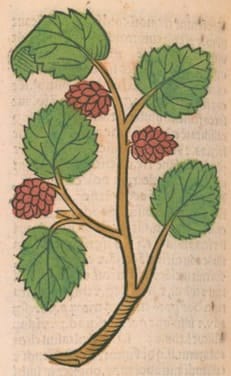
Ortus Sanitatis, Meydenbach, 1491
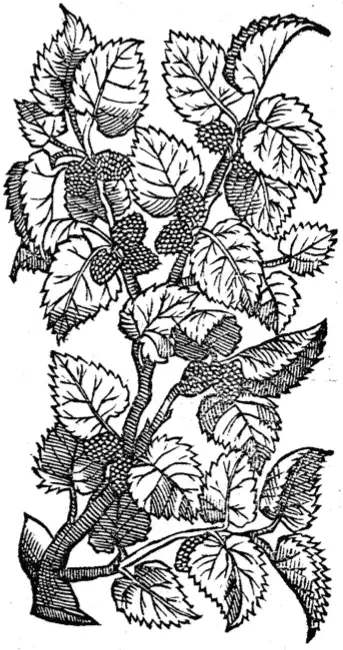
Dioscorides Materia Medica, Mathias, 1563
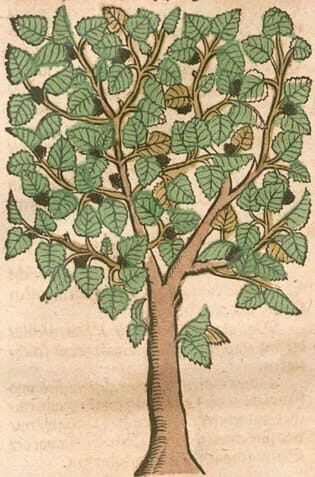
Krauterbuch, Lonitzer, 1578
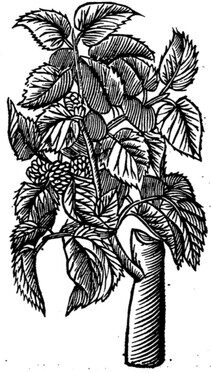
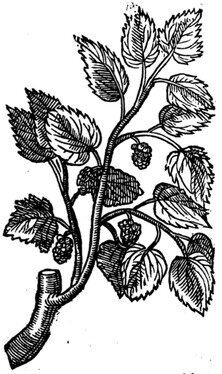
Black Mulberry (left), White Mulberry (right)
Parkinson, Theatrum Botanicum, 1640
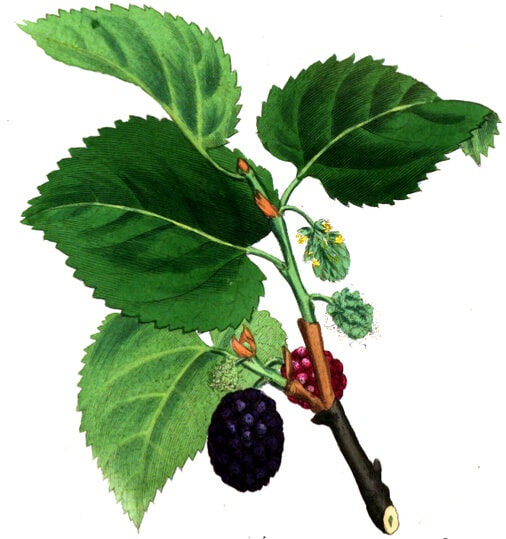
M. nigra
Medical Botany, Woodville, Hooker, 1832
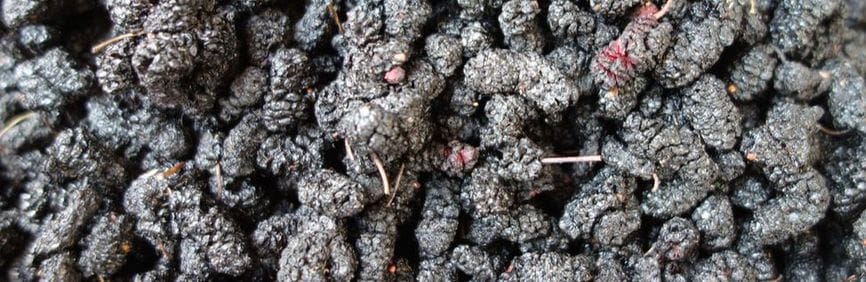
Dried Black Mulberry
Botanical name:
Morus nigra
Two main varieties are noted:
1. Morus nigra (Black)
2. Morus alba (White), used in TCM (see separate listings)
Others used include M. laevigata, M. indica, M. serrata
Parts used:
Root-bark, Leaf, Fruit
Temperature & Taste:
The Mulberry tree, in general, is Cool.
Classifications:
FRUIT:
2S. STRENGTHENING MEDICINES
4d. PECTORAL
Laxative, Purgatives and Cathartics
ROOT-BARK:
3Q. ANTHELMINTIC
Medicines for Worms and Parasites
LEAF:
A. Clear Exterior Wind-Cold
Uses:
ROOT BARK (Cool, dry, bitter, cleanses, astringes):
-opens the Liver and Spleen, loosens the Belly
-Promotes urine: Edema
-Kills Broad Worms
-used against Poison including Leopards Bane
-“The bark of its tree is an antidote for Hemlock seeds”. (Avicenna)
UNRIPE BERRIES (cold and dry in the 3rd degree, very binding):
-all Fluxes, Diarrhea, Dysentery, Uterine Bleeding, spitting of Blood (similar nature to Pomegranate peel and flower)
-sore and ulcerated Mouth and Throat (gargles etc)
-Dioscorides said they are used instead of Sumac
RIPE BERRIES (Cool, moist. Sweet):
-loosens the Belly (taken before meals)
-Cools the Heat of Fever
-benefits Yin and Blood, quenches Thirst
-strengthens Stomach, removes nausea, promotes a good Appetite
-Antidote to Aconite (Matthiolus)
-classically for all Heat-type Sores and ulcers of the Mouth and Throat (syrup or ‘rob’ of not-quite-ripe fruit)
LEAF:
-leaf juice is used for Spider bite (Dioscorides)
-Boiled alone, with or without the bark, cures Toothache (Dioscorides)
-beaten with oil and applied to burns (Dioscorides)
Dose:
Fresh Fruit Juice: 20–60mls.; Dried Fruit in Decoction: 9–15 grams
Dried Leaf in Decoction: 4–9 grams
Mulberry Root-Bark in Decoction: 4–12 grams
Main Combinations:
1. Gargle for Sore Throat:
i. mix Syrup of Mulberry with Barley water as a gargle
ii. Mulberry, Elder flower
2. Worms, Fern root, Mulberry bark (2 drams each), Scordium (1 scruple), Syrup of Wormwood, sufficient to form a Bolus. (Memorial Pharmaceutique, 1824)
3. to Color the Hair, Mulberry leaf with Grape leaf and Black Figs as a wash (Dioscorides)
Major Formulas:
Cautions:
None noted
Main Preparations used:
Distilled Water of the Unripe Berries, Rob (Ripe Berry juice with Honey), Diamoron compound (several versions),
The White and Black Mulberries, as used in East and West respectively, are similar and closely related species. There are similarities in the use in East and West, but some differences. The Root-bark was regarded as strong to ‘purge’ water in the West; while the White Mulberry root-bark is used to pass urine in TCM, it appears to be not as strong as its western counterpart. The leaf is an important medicine in TCM, but was rarely used in the West. In both systems, unripe Mulberries have been used as astringents, while Ripe mulberries are used to nourish the Blood and Yin. According to various sources, they may be used interchangeably. However, we have separated the Chinese use of the various parts of the Mulberry tree because of their specific uses that are different to the use in the West.