Nardi Celtica, Celtic Spikenard
European Spikenard, Roman Spikenard
Sunbul Rumi (Unani)
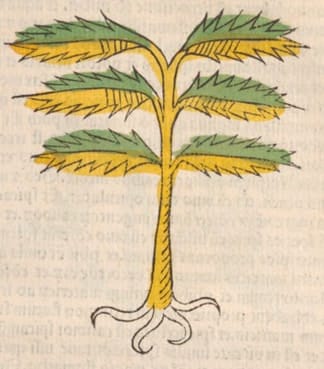
Herbarius latinus, Petri, 1485
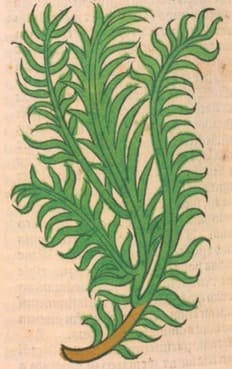
Ortus Sanitatis, Meydenbach, 1491
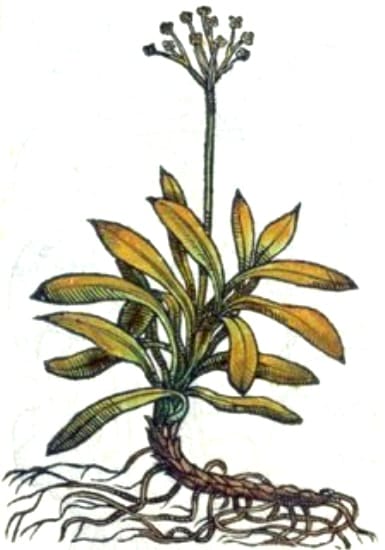
De Materia Medica, Dioscorides, 1555
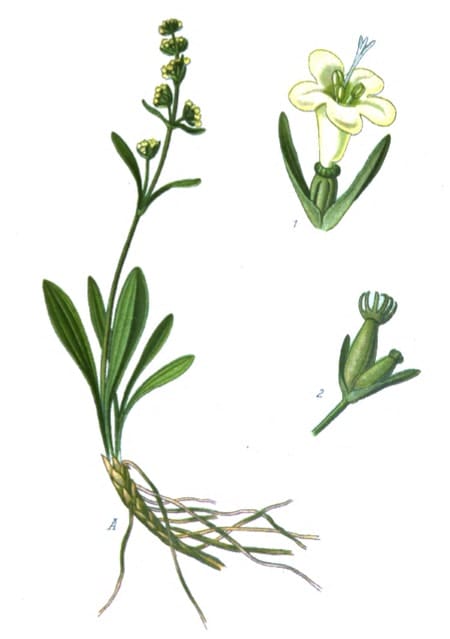
Flora von Deutschland (28), Kohler, 1886
Botanical name:
Valeriana celtica
Parts used:
Root or whole plant
“It is small plant which is collected alongwith its roots” (Avicenna)
Temperature & Taste:
Warm, dry. Pungent, aromatic.
Uses:
It has the virtues of Indian Spikenard, but weaker
It is more powerful to promote Urine, dissolve Stones, and strengthen the Stomach.
“Roman nard is weaker than Indian spikenard and Suri variety in all properties except in promoting diuresis.” (Avicenna)
Dose:
Powder: 1–3 grams with Honey
Substitute:
Celtic Spikenard was used as a substitute for Indian Spikenard when unavailable.
Main Combinations:
1. Jaundice and Stomach disorders, Celtic Spikenard with Decoction of Wormwood (Dioscorides)
Cautions:
As with Indian Spikenard and Valerian, it is drying, so not suitable for Yin deficiency