Rubia, Madder, Qian Cao 茜草
Dyers Madder
Qian Cao (TCM)
Manjistha (Ayurveda)
Manjeeth, Manjesta, Favvah (Unani)
Btsod བཙོད (Tibetan)

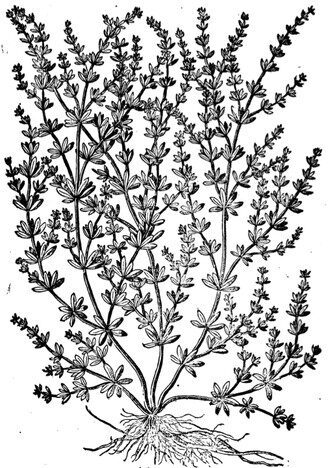
New Kreuterbuch, Matthiolus, 1563
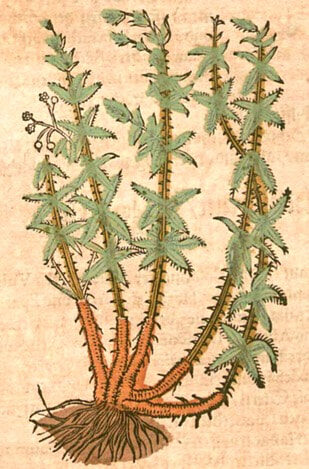
Krauterbuch, Lonitzer, 1578
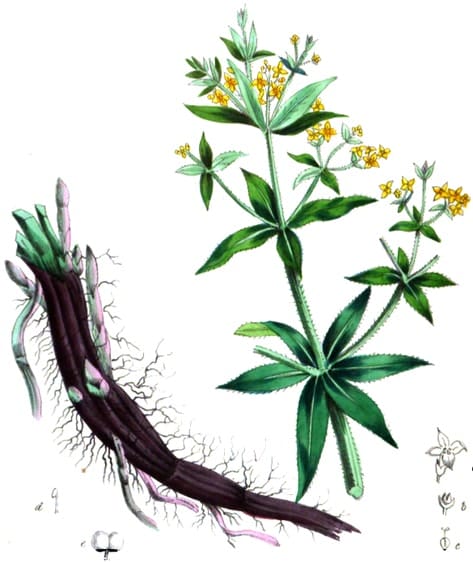
An Encyclopaedia of useful and ornamental Plants, Burnett, 1852
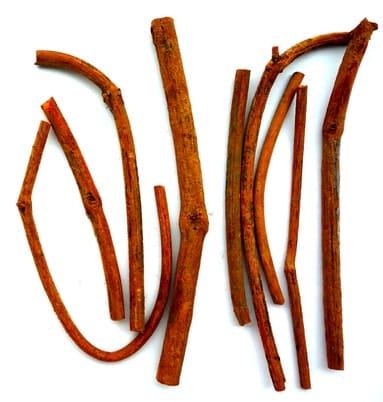
Madder root as used in Tibetan Medicine (Adam, 2016)

Members CLICK HERE for the PRO VERSION
Botanical name:
Rubia tinctorum
Garden (R. tinctorium) and Wild (R. sylvestris) were known
R. cordifolia (syn. R. manjistha) the Indian Madder, is used in TCM, Tibetan Medicine and Ayurveda. In some parts of China (Xinjiang) R. tinctorum is used as Qian Cao Gen, meaning that the two species are used synonymously.
Parts used:
Root
Temperature & Taste:
Cool (some held it warm), dry. Bitter, Sweet, Pungent
Classifications:
2A APERIENT. 2D ATTENUATERS OF CONGEALED BLOOD. 2F. PURIFYING. 2G. CLEANSING. 2P. HEMOSTATIC
3E. DIURETIC. 3F. LITHONTRIPTIC. 3G. EMMENAGOGUE
4f. SPLENETIC. 4h. NEPHRITIC. 4i. UTERINE. 4k. ARTHRITIC
Uses:
1. Cools the Blood, Stops Bleeding (West, TCM, Ayurveda, Tibetan Medicine):
-Bleeding with heat, or when associated with Blood stasis
2. Clears Heat, Moves the Blood, Opens Obstruction, Clears Stasis (West, TCM, Ayurveda, Tibet):
-swelling and hardness of the Spleen or Liver
-Scrofula, Tumors and Cancer.
3. Clears Heat and Poison (West, Ayurveda, Tibet):
-Ayurveda says it is ‘the best blood purifier’
-Eczema, Psoriasis, Dermatitis, Herpes, Acne
4. Clears Damp, Promotes Urine, Clears Gravel and Stones (West, Ayurveda, Tibet):
-Edema, Fluid retention
-Gravel, and Stones (has been regarded as specific for Stones)
5. Clears Deficient Heat, Benefits the Bones:
-chronic inflammations, Hectic Fever
–Arthritis, Rheumatoid Arthritis and Sciatica.
6. Clears Heat and Phlegm, Benefits the Throat, Stops Cough:
-traditionally in Ayurveda to Benefit the Throat and is used in Tonsillitis and Hoarseness, as well as Lung conditions.
-Chronic Bronchitis (TCM)
7. Rasayana (Tonic to the 7 Body Tissues):
-Diabetes
-‘Tonifies the Interior’. (Shen Nong Ban Cao)
8. Externally:
-external Injury and Trauma.
-a paste of the root and Honey is applied to Swellings and Inflammations.
-a paste of the root powder with honey is applied to skin conditions including Scabies, Tinea, Eczema, Psoriasis, Leucoderma, Pityriasis Versicolor, Pityriasis Alba, Freckles and other skin discolorations.
-“applied with vinegar to cure pityriasis alba”. (Avicenna)
-“It also clears the skin and removes all kinds of spots and stains”. (Avicenna)
-‘creeping sores’ (Lonicerus)
-a wash externally for Tubercular conditions of the skin or mucus membranes.
–Dioscorides used a cataplasm with vinegar for mild cases of Leprosy.
-in tooth powders for loose Teeth, painful and bleeding gums etc.
-in Collyriums for the eyes
-in India it is used in oils topically for Greying Hair.
–Dioscorides used a pessary to promote lochial discharge.
Dose:
Powder: 1–3 grams
Decoction: 6–12 grams
Correctives:
Substitutes:
Preparation:
Comment:
This is a special medicine for the Blood; it can move the Blood to clear stasis; stop Bleeding from Heat, and clear Heat and Toxin from the Blood.

Main Combinations:
Lacca & Madder
Madder & Rhubarb
1. Madder is commonly combined with … available in PRO version
2. Madder is also commonly combined with … available in PRO version
3. To open obstructions, for Fibroids, Liver swelling, Edema and Stones, Madder with … available in PRO version
4. Menstrual obstruction and pain, Madder with … available in PRO version
5. Uterus obstructions, Fibroids:
i. Madder with … available in PRO version
ii. Madder with … available in PRO version
6. Chlorosis, Madder with … available in PRO version
7. Irregular Uterine Bleeding, Madder with … available in PRO version
8. Chronic skin diseases including Leprosy, Madder with … available in PRO version
9. Blood Stasis (in the Chest), Madder with … available in PRO version
10. Jaundice:
i. Madder with … available in PRO version
ii. Madder with … available in PRO version
11. Dysentery, Madder with … available in PRO version
12. Edema, Madder with … available in PRO version
13. Trauma, Bruising, Madder with … available in PRO version
14. Fractures, combine Madder with … available in PRO version
Major Formulas:
Decoction for Jaundice
Emmenagogue Decoction (Riverius)
Emmenagogue Syrup
Syrup of Mugwort Lesser (Bononiense)
Powder of Madder
Powder of Gum Lacca Lesser of Rhasis (Dialacca Minor) (Rhasis)
Powder of Gum Lacca Lesser (Dialacca Minor) (Mesue)
Powder of Gum Lacca Greater (Dialacca Majores) (Mesue)
Powder to Promote Birth (Alexander)
Bruise Powder (Mesue)
Powder Against Bruising
Powder for Bruising Greater (Wirtzung)
Powder for Congealed Blood in the Chest
Powder for Edema (Wirtzung)
Troches of Gum Lacca (Trochisci de Lacca) (Mesue)
Electuary for Internal Bruising
Pills for Retention of Urine (Wirtzung)
Madder Pill (Tibetan Medicine)
Amomum 11 (Ko la 11) (Tibetan Medicine)
Chebula 10 (A Ru 10) (Tibetan Medicine)
Chebula 18 (A Ru 18) (Tibetan Medicine)
Sandalwood 18 (Tibetan Medicine)
Possessor of Ruby Color (Pad rag mdog ldan) (Tibetan Medicine)
Cautions:
1. Use carefully in Kidney inflammation
2. Not used in Cold and weak digestion in TCM.
3. It can aggravate Wind diseases
4. It tinges the Urine and even the Bones a red color
5. Toxic in large doses
Main Preparations used:
‘Madder is used in Hindu medicine as a colouring agent: medicated oils are boiled with Madder to give them colour. It is also a useful external astringent, and is applied to inflamed parts, ulcers, fractures, &c. Chakradatta recommends Madder rubbed with honey as an application to the brown spots of pityriasis versicolor.
The Sanskrit name for Madder is Manjishtha. Under the names of Fuvvah and Runas, Arabic and Persian writers treat of Madder, probably the produce of R. tinctorium (as the roots which come from Afghanistan appear to be identical with those of the European species). They do not, however, make any distinction between the species, but simply mention a wild and a cultivated variety. The Mahometans consider the drug to be deobstruent and prescribe it in paralytic affections, jaundice, obstructions in the urinary passages and amenorrhoea. They mention the fruit as useful in hepatic obstruction, and a paste made from the roots with honey, as a good application to freckles and other discolorations of the skin. The whole plant is reputed to be alexipharmic; it is also hung up in houses to avert the evil eye, and tied to the necks of animals with the same object. Ainslie observes that the hakims are in the habit of prescribing an infusion of Madder root as a grateful and deobstruent drink in cases of scanty lochial discharge after lying-in. (Materia Indica II., p.182.)
In another notice of the article {Op. cit. I. p.202), he remarks that it would appear to be chiefly produced in Cuchar, and the root is in great demand in the adjacent countries, for dyeing their coarse cloths and stuffs red; the Nepalese are in the habit of bartering it for rock salt and borax. Kinnier and Tavernier notice the abundance of Madder in Persia and Makran. Dr. G. Playfair, in a note appended to his translation of the Talif-i-sharifi (p. 150), states that if taken to the extent of about 3 drachms several times daily, it powerfully affects the nervous system, inducing temporary delirium, &c, with evident determination to the uterine system. The plant is common on the higher ghauts in the Bombay Presidency, but the Bombay market draws its supplies chiefly from Khelat through Sind. The imported article fetches a higher price than that grown in India. (Vegetable Materia Medica of Western India, Dymock, 1885)
GENERAL REVIEW:
–A comprehensive review of Rubia cordifolia L.: Traditional uses, phytochemistry, pharmacological activities, and clinical applications
–A Review of the Botany, Phytochemistry, Pharmacology and Toxicology of Rubiae Radix et Rhizoma.
–Comparative studies of rubia cordifolia linn. And rubia tinctorum linn (rubiaceae)(*).
–[Studies on anthraquinones from the roots of rubia cordifolia l].
ANTIBACTERIAL:
–MRSA–Determination of Antimicrobial Potential of Five Herbs used in Ayurveda Practices against Candida albicans, Candida parapsilosis and Methicillin Resistant Staphylococcus aureus.
–Evaluation of the antibacterial activity of Ventilago madraspatana Gaertn., Rubia cordifolia Linn. and Lantana camara Linn.: isolation of emodin and physcion as active antibacterial agents.
–[Studies on antibacterial constituents from the roots of Rubia cordifolia L].
ANTI-VIRAL:
–In vitro Antiviral Activity of Rubia cordifolia Aerial Part Extract against Rotavirus.
–Anti-HIV activity of Indian medicinal plants.
–Inhibition of hepatitis B surface antigen secretion on human hepatoma cells. Components from Rubia cordifolia.
ANTI-FUNGAL:
–Determination of Antimicrobial Potential of Five Herbs used in Ayurveda Practices against Candida albicans, Candida parapsilosis and Methicillin Resistant Staphylococcus aureus.
LARVICIDAL:
–In vitro Antiviral Activity of Rubia cordifolia Aerial Part Extract against Rotavirus.
ANTI-OXIDANT:
–Characterization of Rubia cordifolia L. root extract and its evaluation of cardioprotective effect in Wistar rat model.
–Ameliorative effect of methanol extract of Rubia cordifolia in N-nitrosodiethylamine-induced hepatocellular carcinoma.
–The protective effect of Rubia cordifolia against lead nitrate-induced immune response impairment and kidney oxidative damage.
–Antioxidant phenolic constituents in roots of Rheum officinale and Rubia cordifolia: structure-radical scavenging activity relationships.
–Effect of Rubia cordifolia, Fagonia cretica linn, and Tinospora cordifolia on free radical generation and lipid peroxidation during oxygen-glucose deprivation in rat hippocampal slices.
–Rubiadin, a new antioxidant from Rubia cordifolia
ANTI-INFLAMMATORY:
–Evaluation of analgesic and anti-inflammatory activities of Rubia cordifolia L. by spectrum-effect relationships.
–In vitro and in vivo inhibitory effects of 6-hydroxyrubiadin on lipopolysaccharide-induced inflammation.
–Anti-diarrheal and anti-inflammatory activities of aqueous extract of the aerial part of Rubia cordifolia.
–Mollugin inhibits the inflammatory response in lipopolysaccharide-stimulated RAW264.7 macrophages by blocking the Janus kinase-signal transducers and activators of transcription signaling pathway.
–Neuroprotective and anti-inflammatory effects of mollugin via up-regulation of heme oxygenase-1 in mouse hippocampal and microglial cells.
–Anti-inflammatory action of mollugin and its synthetic derivatives in HT-29 human colonic epithelial cells is mediated through inhibition of NF-kappaB activation.
–Topical anti-inflammatory activity of pinda thailam, a herbal gel formulation
ANTI-ALLERGY:
–Chinese herbal extracts of Rubia cordifolia and Dianthus superbus suppress IgE production and prevent peanut-induced anaphylaxis.
DETOXICANT:
–The protective effect of Rubia cordifolia against lead nitrate-induced immune response impairment and kidney oxidative damage.
RADIOPROTECTIVE:
–Role of Rubia cordifolia Linn. in radiation protection.
INHIBIT XANTHINE OXIDASE:
–Total phenolics, antioxidant, antitumor, and enzyme inhibitory activity of Indian medicinal and aromatic plants extracted with different extraction methods.
INHIBITS ALPHA-GLUCOSIDASE:
–[Alpha-glucosidase inhibitors from Rubia cordifolia].
ANTI-DIARRHEA:
–Anti-diarrheal and anti-inflammatory activities of aqueous extract of the aerial part of Rubia cordifolia.
INFLAMMATORY BOWEL DISEASE:
–Protective Effect of Hydroalcoholic Root Extract of Rubia cordifolia in Indomethacin-Induced Enterocolitis in Rats.
ANALGESIC:
–Evaluation of analgesic and anti-inflammatory activities of Rubia cordifolia L. by spectrum-effect relationships.
ANTI-THROMBOTIC:
–Anti-thrombotic and pro-angiogenic effects of Rubia cordifolia extract in zebrafish.
ANTI-PLATELET:
–Anti-platelet activating factor property of Rubia cordifolia Linn.
ANTI-DIABETIC:
–Alizarin increase glucose uptake through PI3K/Akt signaling and improve alloxan-induced diabetic mice.
–Antihyperglycemic, antistress and nootropic activity of roots of Rubia cordifolia Linn.
CARDIOPROTECTIVE:
–Characterization of Rubia cordifolia L. root extract and its evaluation of cardioprotective effect in Wistar rat model.
GASTROPROTECTIVE:
–The protective effect of Rubia cordifolia against lead nitrate-induced immune response impairment and kidney oxidative damage.
HEPATOPROTECTIVE:
–Hepatoprotective effects of rubiadin, a major constituent of Rubia cordifolia Linn
NEPHROPROTECTIVE:
–Amelioration of cisplatin induced nephrotoxicity in Swiss albino mice by Rubia cordifolia extract.
NEUROPROTECTIVE:
–Neuroprotective and anti-inflammatory effects of mollugin via up-regulation of heme oxygenase-1 in mouse hippocampal and microglial cells.
–Effect of Rubia cordifolia, Fagonia cretica linn, and Tinospora cordifolia on free radical generation and lipid peroxidation during oxygen-glucose deprivation in rat hippocampal slices.
ANTI-STRESS:
–Antihyperglycemic, antistress and nootropic activity of roots of Rubia cordifolia Linn.
ANTI-CONVULSANT / SPASMOLYTIC:
–Anticonvulsant and behavioral actions of triterpene isolated from Rubia cordifolia Linn.
–Possible presence of calcium channel blocker(s) in Rubia cordifolia: an indigenous medicinal plant.
INCREASES BRAIN GABA AND SEROTONIN:
–Anticonvulsant and behavioral actions of triterpene isolated from Rubia cordifolia Linn.
PSORIASIS:
–1,4-dihydroxy-2-naphthoic Acid Induces Apoptosis in Human Keratinocyte: Potential Application for Psoriasis Treatment.
–Ethyl acetate fraction of the root of Rubia cordifolia L. inhibits keratinocyte proliferation in vitro and promotes keratinocyte differentiation in vivo: potential application for psoriasis treatment.
URINARY CALCULI:
–Protective effect of the hydro-alcoholic extract of Rubia cordifolia roots against ethylene glycol induced urolithiasis in rats.
–Dietary Plants for the Prevention and Management of Kidney Stones: Preclinical and Clinical Evidence and Molecular Mechanisms
CYTOTOXIC:
–Anthraquinones, naphthohydroquinones and naphthohydroquinone dimers from Rubia cordifolia and their cytotoxic activity.
ANTI-TUMOR:
–[Alpha-glucosidase inhibitors from Rubia cordifolia].
–Two antitumour bicyclic hexapeptides from Rubia cordifolia.
–[Phase I Study of RA-700. RA-700 Clinical Study Group].
–Structures and conformations of metabolites of antitumor cyclic hexapeptides, RA-VII and RA-X.
–New antitumor bicyclic hexapeptides, RA-XI, -XII, -XIII and -XIV from Rubia cordifolia.
–Antitumor activity and toxicity in mice of RA-700, a cyclic hexapeptide.
ANTI-CANCER:
–Mollugin Has an Anti-Cancer Therapeutic Effect by Inhibiting TNF-α-Induced NF-κB Activation.
–Mollugin inhibits proliferation and induces apoptosis by suppressing fatty acid synthase in HER2-overexpressing cancer cells.
–Mollugin inhibits proliferation and induces apoptosis by suppressing fatty acid synthase in HER2-overexpressing cancer cells.
–Anti-inflammatory and anticancer compounds isolated from Ventilago madraspatana Gaertn., Rubia cordifolia Linn. and Lantana camara Linn.
–Mollugin induces apoptosis in human Jurkat T cells through endoplasmic reticulum stress-mediated activation of JNK and caspase-12 and subsequent activation of mitochondria-dependent caspase cascade regulated by Bcl-xL.
–Anticancer constituents from the roots of Rubia cordifolia L
–Effect of RC-18, a new anticancer principle isolated from Rubia cordifolia, Linn. on cell cycle of P388 tumour system.
–In vivo anti-cancer activity of RC-18: a plant isolate from Rubia cordifolia, Linn. against a spectrum of experimental tumour models.
–Anti-cancer activity of the extracts of Rubia cordifolia Linn.
LIVER
–Ameliorative effect of methanol extract of Rubia cordifolia in N-nitrosodiethylamine-induced hepatocellular carcinoma.
LEUKOPENIA:
–[Clinical observation on the increase of leukocyte count in leukopenia promoted by diethylester Rubia cordifolia L].