Tabanus, Gad Fly, Meng Chong 虻虫
Tabanus, Horse Fly
Meng Chong (TCM)


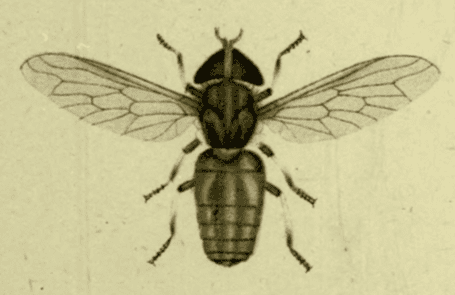
Tabanus mandarinus
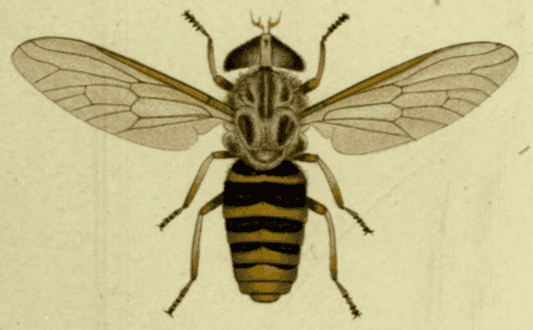
Tabanus chrysurus
Blood Sucking Insects of Formosa, Shiraki & Hakushi, 1918
Entomological name:
Tabanus spp.
A number of species supply the market, the main ones being:
1. T. bivittatus
2. T. mandarinus
3. T. kiangsuensis
4. T. pleskei
5. T. chrysurus
6. T. budda
7. T. omeishanensis
Parts used:
Dried Female Insect with legs and wings removed.
Temperature & Taste:
Slightly Cold, dry. Bitter. Toxic
Classification:
Uses:
1. Breaks Up Blood Stasis, Opens the Channels, Resolves Masses:
-Amenorrhea, Dysmenorrhea
-Abdominal Masses, Fibroids and Tumors from Blood Stasis
-Retained Lochia
-“They drive out stagnant blood, break open blood accumulations, hardenings, concretions and conglomerations”. (Ben Jing, Ben Cao Gang Mu)
2. Moves the Blood, Promotes Healing:
-Trauma, Bruising
3. Clears Heat, Resists Poison:
-pain, swelling and obstruction of the Throat
-Snake Bite
-“Throat blockage, filled with nodes”. (Bie Lu)
-“They dissolve accumulated pus”. (Ben Cao Gang Mu)
Dose:
Decoction: 1–3 grams
Powder: 300–600mg (up to 1 gram), with wine to move the blood.
Comment:
Tabanus is considered stronger than Leech to break blood stasis and resolve masses, however, it has a shorter lasting effect. Leech is considered to have a long-lasting, more sustained and more reliable effect. Therefore, they work well together, especially in fixed abdominal masses and Tumors.
Preparation:
They are generally baked until brown and crispy. This facilitates powdering, lessens their foul smell, and reduces toxicity.
Main Combinations:
Often combiend with Leech to move the Blood and resolve blood stasis and masses.
1. Amenorrhea from Blood Stasis:
i. Tabanus with Ligusticum Chuan Xiong, Dang Gui, Safflower (Hong Hua)
ii. Tabanus, Rhubarb (Da Huang), Myrrh (Mo Yao)
2. Abdominal masses and Postpartum Blood stasis:
i. Tabanus with Leech (Shui Zhi), Rhubarb (Da Huang), Peach kernel (Tao Ren)
ii. Tabanus with Leech (Shui Zhi), Peach kernel (Tao Ren), Safflower (Hong Hua), Zedoary (E Zhu), Sparganum San Leng, Ligusticum Chuan Xiong
iii. Tabanus with Motherwort (Yi Mu Cao), Safflower (Hong Hua), Leech (Shui Zhi), vinegar-prepared Cyperus rotundus (Xiang Fu), Myrrh (Mo Yao), Frankincense (Ru Xiang), Bitter Almond (Ku Xing Ren), Peach kernel (Tao Ren), Corydalis Yan Hu Suo, Toxicodendron resin (Gan Qi) (as in Huazheng Huisheng Tablets of the Chinese Pharmacopoeia)
3. Retained Lochia, Tabanus with Rehmannia Shu Di Huang, Leech (Shui Zhi), Peach kernel (Tao Ren)
4. To expel the Fetus: ‘To expel the fetus when the pregnant mother is in critical condition, Stir-fry 10 Tabanus (Meng Chong), pound into powder, and take by mouth with wine. This will cause the fetus to be expelled’. (Ben Cao Gang Mu)
5. Significant Blood Stasis, Abdominal Masses:
i. Tabanus, Leech (Shui Zhi), Rhubarb Da Huang, Peach kernel (Tao Ren), Myrrh, (Mo Yao)
ii. Tabanus with Zedoary (E Zhu), Corydalis Yan Hu Suo, Achyranthes Niu Xi, Flying Squirrel Feces (Wu Ling Zhi)
6. Trauma, Bruising,
i. Tabanus (20) with Paeonia Mu Dan Pi (30 grams). Powder, take a spoonful with wine. (Bei Ji Fang, TCM)
ii. Tabanus with Rhubarb (Da Huang), Myrrh (Mo Yao), Frankincense (Ru Xiang)
iii. Tabanus with Rhubarb (Da Huang), Paeonia Mu Dan Pi, Drynaria Gu Sui Bu, Myrrh (Mo Yao), Frankincense (Ru Xiang)
7. Snake Bite with bleeding of out of the orifices, burn 21 Tabanus, powder, and take with hot water. (Zhou Hou Fang, TCM)
Major Formulas:
Da Huang Zhe Chong Wan
Di Dang Tang
Huazheng Huisheng Tablets (Chinese Pharmacopoeia)
Cautions:
1. Not used during pregnancy or Menstruation.
2. Only used in those with Blood stasis.
3. Caution in patients with debility (Qi and Blood deficiency).
4. It may cause Diarrhea which is transient and ceases when the medicine is stopped.