Ziziphus, Jujube, Da Zao
Zizyphus, Jujube, Da Zao 大枣
Da Zao, Hong Zao (Red) (TCM)
Unnab (Unani, Arabic)
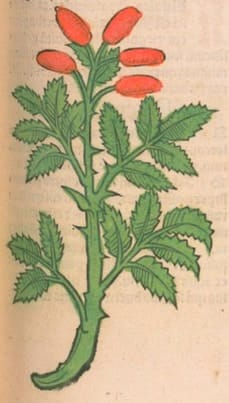
Ortus Sanitatis, Meydenbach, 1491
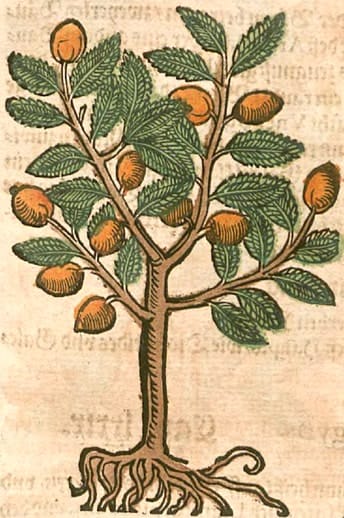 | 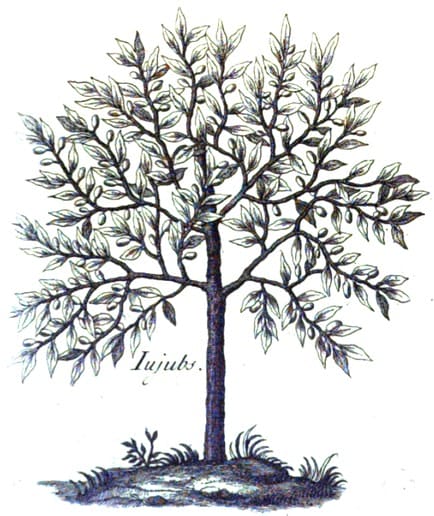 |
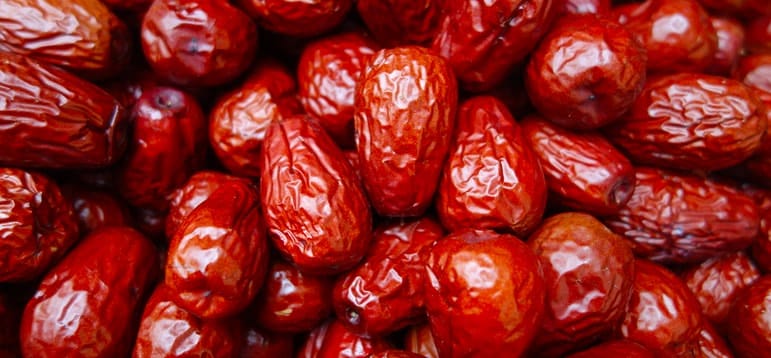
Red Jujube Da Zao (Adam, 2017)

Members CLICK HERE for the PRO VERSION
Botanical name:
Ziziphus jujuba (syn. Z. vulgaris)
Parts used:
Fruit; Black and Red varieties are used in TCM (mostly the Red); a White kind was known in the West.
Temperature & Taste:
Neutral, moist. Sweet
Classifications:
2E LENITIVE. 2F. PURIFYING. 2S. STRENGTHENING
3K. EXPECTORANT. 3L. ANTI-TUSSIVE
4d. PECTORAL
Preparers and Purgers of Bile
Uses:
1. Strengthen the Lungs, Stops Cough (West):
-Hoarseness, Cough, Pleurisy, Spiting of Blood
-Wheezing, shortness of Breath
-“Useful for the Chest and Lungs”. (Avicenna)
2. Benefits the Spleen and Qi (West, TCM):
-Indigestion, poor appetite, fatigue
–Pliny said it prevented diseases of the Stomach
-moderates a formula, makes other herbs more agreeable to the Stomach (similar to Licorice) (TCM)
3. Nourish the Blood, Benefits the Heart, Calms the Mind and Nerves:
-Palpitation, Irritability, emotional debility, Shock (TCM, Unani)
4. Promotes Urine, Clears Stones:
-sharp Urine, corrosion of the Bladder or Kidney
-‘Exulceration [Ulcers], or Excoriation of the Kidneys and Bladder’. (Pomet, 1748)
-Kidney and Bladder pain (Unani)
-for Stones since Dioscorides. (Seed can be used)
5. Clears Heat and Bile, Resists Poison:
-‘tempers the sharpness of Blood and Humors’. (Pomet, 1748)
-biliousness
-Eczema, Syphilis, Erysipelas
-Scrofula, Plague Buboes
-for Blood Heat and to cleanse the Blood
-Bites, Stings and Poison (Dioscorides)
Dose:
Decoctions or Soups: 3–9 dates (typically 4–5), or 10–30 grams in Decoction.
Often added to Soups in China

Main Combinations:
1. Pectoral Fruits: Jujubes with … available in PRO version
2. Cough:
i. Jujube with … available in PRO version
ii. Jujube with … available in PRO version
iii. Jujube with … available in PRO version
iv. Jujube with … available in PRO version
3. Pneumonia, Jujube, … available in PRO version
4. Digestive weakness and to harmonise the Stomach, Jujube with … available in PRO version
5. Deficiency of Blood and Qi, combine Jujube (Da Zao) with … available in PRO version
6. Restlessness, combine Jujube (Da Zao) with … available in PRO version
7. Cosmetic, Jujube, … available in PRO version
Major Formulas:
Syrup of Jujube Compound (Mesue)
Decoction of Fruit
Decoction of Fruit and Flowers
Pectoral Decoction (London, 1650)
Decoction of Hyssop (Zacharia)
Cautions:
Generally Safe.
1. Should not be used to excess or it may cause clumping and obstruction.
2. Not used in Heat conditions (unless corrected).
Main Preparations used:
- Extra Info
- History
| ‘This is the Jujube of Arabic and Persian works on Materia Medica, and is largely imported in a dry state both from the Persian Gulf and China. Mir Mohammad Husain describes it as ” the fruit of a well-known tree of nearly the same size as the kunar and olive, but having leaves a little thicker and longer than those of the kunar, with one side downy. The bark, wood and fruit of the tree are red. The best fruit comes from Jurjan, China and Nipal; it should be sweet and moderately astringent, about the size of a dried date and with a small stone.” He gives a long account of the medicinal virtues of the Jujube, from which we gather that he regards it as a suppurative, expectorant, and purifier of the blood ;its uses would appear to be in many respects similar to those of dried prunes or raisins with us. Pliny, 15, 14, mentions Zizyphus as an exotic fruit coming from Syria, more like a berry than an apple. Sibthorp informs us that it is called in modern Greek nakiovpi, and is probably the nakiovpos of Dioscorides. The French prepare a Pate de jujubes by extracting 5 parts of jujubes in sufficient water to obtain 35 parts of infusion, in which are dissolved gum Arabic 30 parts and sugar 20 parts; the solution is evaporated, two parts of orange flower water added, kept slowly boiling for twelve hours, and then poured into moulds. The bark of the tree is used | to clean wounds and sores, the gum in certain affections of the eyes, and the leaves when chewed are said to destroy the power of the tongue to appreciate the taste of disagreeable medicines. In Western India we have several cultivated varieties of Jujube, which afford edible fruit, as well as a wild variety ; their bark is powerfully astringent, and a kind of lac, known as Bhuri lak, is found upon the branches. The fruit of Zizyphns Jujuba is dried and powdered; this powder is called in Hindi Ber-chuni. The young leaves are pounded with those of Ficus glomerata, and applied to scorpion stings in the Coucan; they are also with acacia catechu leaves given as a cooling medicine in hot weather; dose 2 tolas. According to Ainslie, the root is prescribed in decoction by the Vytians in conjunction with sundry warm seeds, as a drink in certain cases of fever. The white pear-shaped fruit of Z. rugosa (Turun, Bomb.), is eaten by the natives. The fruit of Z. xylopyra (Guti, Bomb.), is used by shoemakers for blackening leather and for making blacking. The flowers of Z. rugosa, with an equal quantity of the petioles of the Betel leaf and half as much lime, are given in 4 grain pills twice a day for menorrhagia’. (Vegetable Materia Medica of Western India, Dymock, 1885) |